Porch Light Letters ·
Did My Ancestors Change Their Surname When They Immigrated
Have you ever searched for an immigrant ancestor, only to discover that their surname seems to have changed somewhere between leaving their homeland and settling in a new country? Perhaps your family has always told the story that a great-grandparent's name was changed by an immigration official, or you've discovered a passenger list showing a surname that looks nothing like the one your family uses today. It's tempting to imagine an ancestor stepping off a ship, being handed a completely new name, and beginning an entirely different chapter of their life. But did immigration officials really change people's surnames, and how can we discover when, why, and where our ancestors' family names may have changed?
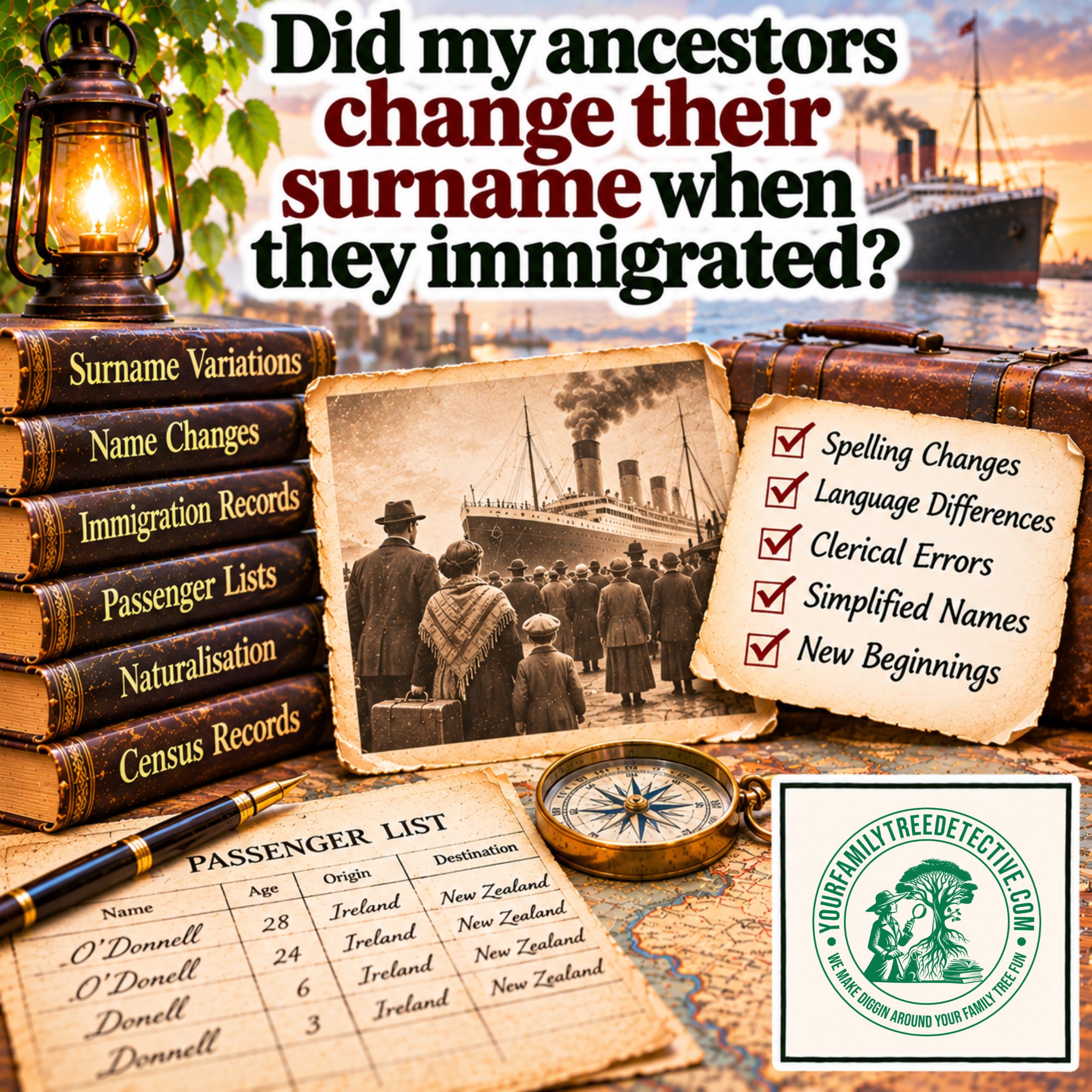
One of the most persistent family history legends is that immigration officials routinely changed immigrants' surnames when they arrived at places such as Ellis Island in the United States. In reality, Ellis Island inspectors generally worked from passenger manifests prepared by shipping companies before departure, rather than assigning new names to arriving passengers. However, spelling variations, transcription mistakes, unfamiliar languages, and misunderstandings could still result in names being recorded differently across immigration and other historical documents. Understanding this distinction is important because a surname appearing differently on a passenger list doesn't necessarily mean an ancestor legally changed their name or that an immigration official deliberately altered it.
There were many reasons immigrants chose to modify, simplify, translate, or adopt different surnames after settling in a new country. Some families adjusted the spelling of their names to make them easier for English-speaking neighbours, employers, and officials to pronounce or write, while others adopted names that sounded more familiar in their new communities. For example, the German surname Müller might appear as Mueller or Miller, while Irish surnames sometimes gained or lost prefixes such as O' or Mc as they passed through different generations and recordkeeping systems. Other changes reflected marriage, adoption, personal preference, cultural assimilation, or attempts to avoid discrimination, although the reasons behind a particular family's name change should never be assumed without supporting evidence.
If you suspect an ancestor changed their surname, begin by comparing records created before and after their migration to identify when different versions of the name first appeared. Passenger lists, naturalisation applications, census returns, marriage certificates, birth registrations, employment records, military documents, and historical newspapers can help establish a timeline of the names your ancestor used. Search for alternative spellings, phonetic variations, translated names, shortened surnames, and different arrangements of given names, remembering that handwriting and transcription errors can make an unfamiliar surname even harder to recognise. Pay particular attention to consistent details such as ages, occupations, birthplaces, spouses, children, and addresses, because these connections can help establish whether records with different surnames actually refer to the same person.
Discovering a surname change can open an entirely new chapter in your family history, particularly when the original name leads to records in your ancestor's homeland that were previously impossible to locate. Remember that surnames were not always spelled consistently, and an ancestor might appear under several variations throughout their lifetime without ever completing a formal legal name change. Rather than concentrating exclusively on the spelling, investigate the people, relationships, locations, and circumstances surrounding your ancestor to understand how their identity was recorded across different stages of their life. Most importantly, a changed surname doesn't erase your family's history, and tracing its development can reveal fascinating stories about migration, language, identity, and the experiences of earlier generations.
Today's Family Tree Challenge
Choose one immigrant ancestor in your family tree and examine how their surname appears in the earliest and latest records you've found for them. Search for at least two additional documents, such as a passenger list, naturalisation record, census return, or marriage certificate, and compare the spelling of their name across those sources. If you discover variations, create a timeline showing when each version appeared and investigate whether the differences resulted from spelling conventions, recording errors, or evidence of a deliberate name change. Record your findings, note any unanswered questions, and consider whether an earlier surname variation could help you discover additional records in your ancestor's homeland.
Let us know in the comments below about the stories you uncover.
Click the link in my profile to schedule a FREE 15-minute Discovery Call
Ready to uncover your own family story?