Porch Light Letters ·
How Can I Find Information About My Ancestors for Free
Have you ever wondered how much it would cost to uncover the stories of your ancestors, only to discover that some genealogy websites require a paid subscription? What if I told you that you could discover generations of family history without spending a single penny? There are millions of historical records, photographs, newspapers, and family documents available through free resources, and some of the most valuable clues might already be sitting in your own home. So, where can you find these hidden treasures, and how do you begin researching your ancestors without opening your wallet?
One of the best places to begin your free genealogy adventure is right at home, where family members and treasured possessions can provide a wealth of information. Talk with parents, grandparents, aunts, uncles, and cousins about family names, birthplaces, occupations, marriages, and stories they remember from earlier generations. Explore old photograph albums, letters, family Bibles, certificates, diaries, and newspaper clippings, paying particular attention to handwritten notes and names recorded on the back of photographs. These family treasures can provide important clues that help you identify ancestors, establish relationships, and determine which historical records to investigate next.
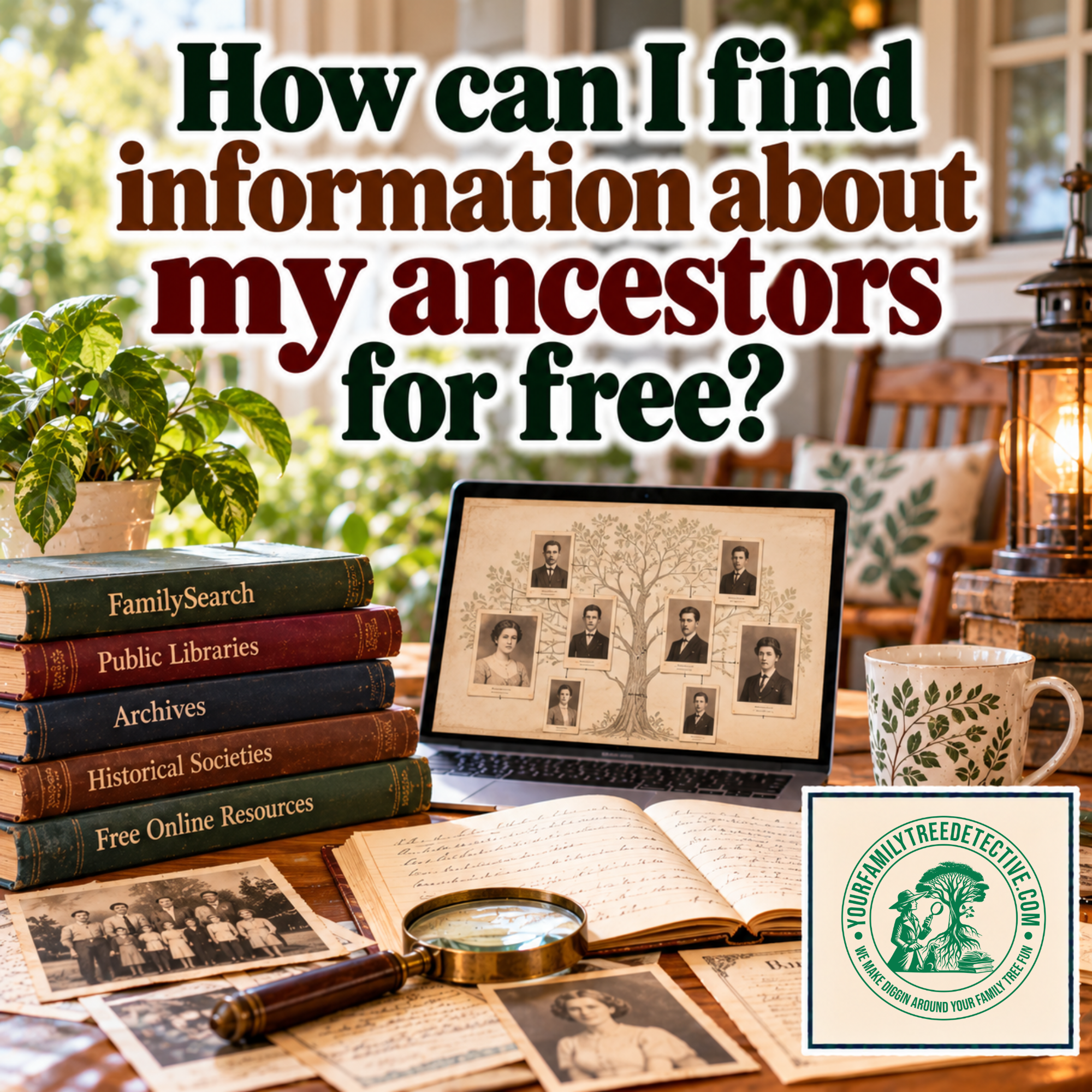
The internet offers several excellent free genealogy resources, and one of the most useful is FamilySearch.org, which provides access to billions of historical records and a collaborative family tree. You can search for birth, marriage, death, census, immigration, and other records, although some collections have viewing restrictions or require access through a FamilySearch centre or affiliate library. Other useful resources include Find a Grave for cemetery information, Chronicling America for historical American newspapers, and Papers Past for digitised New Zealand newspapers and other historical publications. Remember that different websites contain different collections, so if you cannot find an ancestor in one place, try another resource, experiment with spelling variations, and search using the information you already know.
Public libraries, archives, historical societies, and genealogy organisations are often overlooked sources of free family history information. Many libraries provide access to local history collections, historical newspapers, city directories, maps, and genealogy databases that might otherwise require a paid subscription, although access conditions vary. National and regional archives may offer free online indexes, digitised records, military service information, immigration documents, and other valuable resources, while some original records or copies may involve a fee. Don't forget to investigate local museums, cemetery databases, government websites, and historical societies in the places where your ancestors lived, because smaller collections sometimes hold the very information that larger genealogy websites are missing.
Finding information for free is exciting, but successful genealogy research requires more than collecting names and attaching records to a family tree. Always check whether a record genuinely belongs to your ancestor by comparing names, dates, locations, family relationships, and other identifying details, especially when several people share similar names. Keep a record of where you found each piece of information, including website addresses, collection names, document references, and any questions that still need investigating. Most importantly, remember that family history research is about discovering the lives and experiences of the people who came before us, and with patience, curiosity, and a little detective work, you can uncover remarkable family stories without spending a fortune.
Today's Family Tree Challenge: Choose one ancestor you would like to learn more about and write down everything you already know about them. Visit FamilySearch or another free genealogy resource and search for one historical record connected to that person. Record what you discover, where you found it, and whether the information matches what you already know. Share your discovery with a family member and ask whether they have another story, photograph, or clue that could help you continue your research.
Let us know in the comments below about the stories you uncover.
Podcast Replay: https://youtube.com/live/Lm2ansbJXyU?feature=share
Ready to uncover your own family story?