Porch Light Letters ·
How can I find out what my ancestors did for a living?
Have you ever looked at an old family photograph and wondered what your ancestors did every day to put food on the table and provide for their families? Perhaps your great-grandfather was a blacksmith, your great-grandmother worked as a dressmaker, or an earlier ancestor spent their days farming, mining, teaching, or running a small business. Discovering an ancestor's occupation can reveal fascinating details about their daily routines, working conditions, financial circumstances, and the communities in which they lived. So, how can you find out what your ancestors did for a living, and what might their occupations reveal about the lives they led and the challenges they faced?
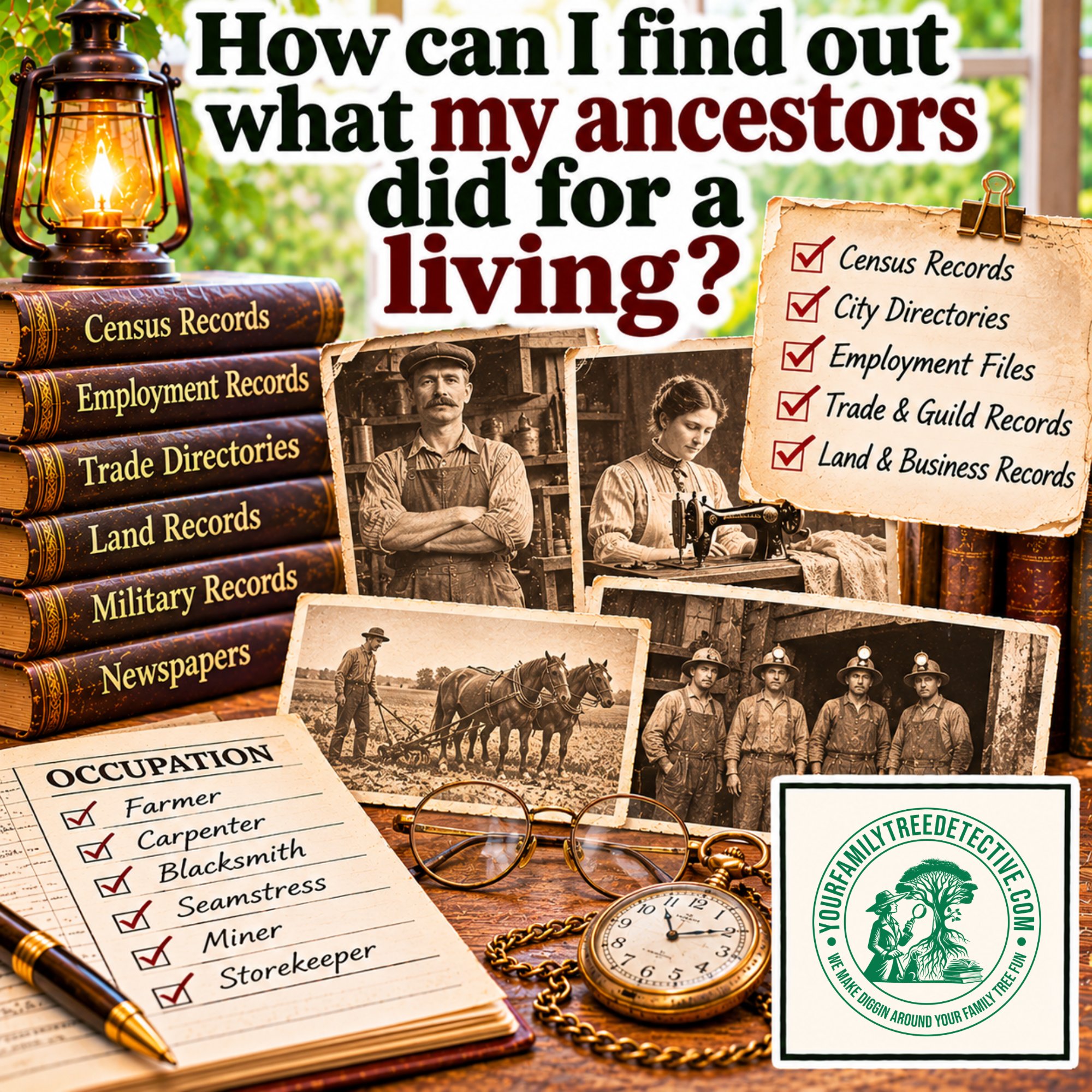
One of the best places to begin researching your ancestors' occupations is with census records, which often recorded the type of work individuals performed at the time the information was collected. Depending on the country and historical period, census returns may identify occupations such as farmer, carpenter, domestic servant, railway worker, merchant, or labourer, providing valuable clues about how your ancestors earned their living. Birth, marriage, and death certificates can also contain occupational information, sometimes revealing a person's employment at different stages of their life or identifying the occupation of a parent or spouse. By comparing these records across several years, you may discover that an ancestor changed careers, followed a family trade, became self-employed, or moved to another location in search of better employment opportunities.
Historical newspapers, trade directories, city directories, and business records can provide additional information about your ancestors' working lives. Newspapers may contain employment advertisements, business announcements, professional achievements, workplace accidents, bankruptcy notices, or reports about local industries, while directories can identify where an ancestor worked or operated a business. Apprenticeship agreements, trade union records, guild registers, employment files, and professional licensing documents may reveal how individuals learned their trades, developed their skills, and established themselves within their communities. Don't overlook land records, probate files, military service documents, and local archives, because these sources sometimes contain occupational details or information about property, tools, businesses, and other assets connected to an ancestor's livelihood.
Once you've discovered an ancestor's occupation, take time to investigate what that work actually involved during the period in which they lived. A job title that seems familiar today may have meant something quite different a century or two ago, while occupations such as cordwainer, cooper, wheelwright, or ostler may require a little historical investigation to understand. Local history books, museums, historical photographs, maps, industry records, and newspaper reports can help you explore working conditions, wages, tools, training, and the economic circumstances affecting people in particular trades. Remember that not all work was formally recorded, especially unpaid domestic labour, family farming, childcare, and informal employment, so an ancestor listed without an occupation may still have contributed significantly to their household and community.
Discovering what your ancestors did for a living can transform a collection of names and dates into a much richer understanding of your family's history. Imagine learning that several generations worked in the same trade, that an ancestor established a successful business, or that a family relocated because a local industry was expanding or declining. Their occupations may also help explain where they lived, whom they associated with, how they met their spouses, and why later generations pursued different opportunities. Most importantly, researching your ancestors' working lives allows you to appreciate the skills, determination, everyday responsibilities, and personal experiences that helped shape the families and communities we know today.
Today's Family Tree Challenge
Choose one ancestor in your family tree and investigate what they did for a living during their lifetime. Search a census return, birth or marriage certificate, historical directory, newspaper, or other relevant record for information about their occupation. Research what that particular job involved during the period and location in which your ancestor lived, paying attention to working conditions, tools, training, and opportunities. Record your findings, note where the information came from, and consider how your ancestor's occupation may have influenced their family life and the generations who followed.
Let us know in the comments below about the stories you uncover.
Click the link in the profile to set a FREE 15-minute Discovery Call.
Ready to uncover your own family story?