Porch Light Letters ·
How Can I Use DNA Matches to Identify an Unknown Ancestor
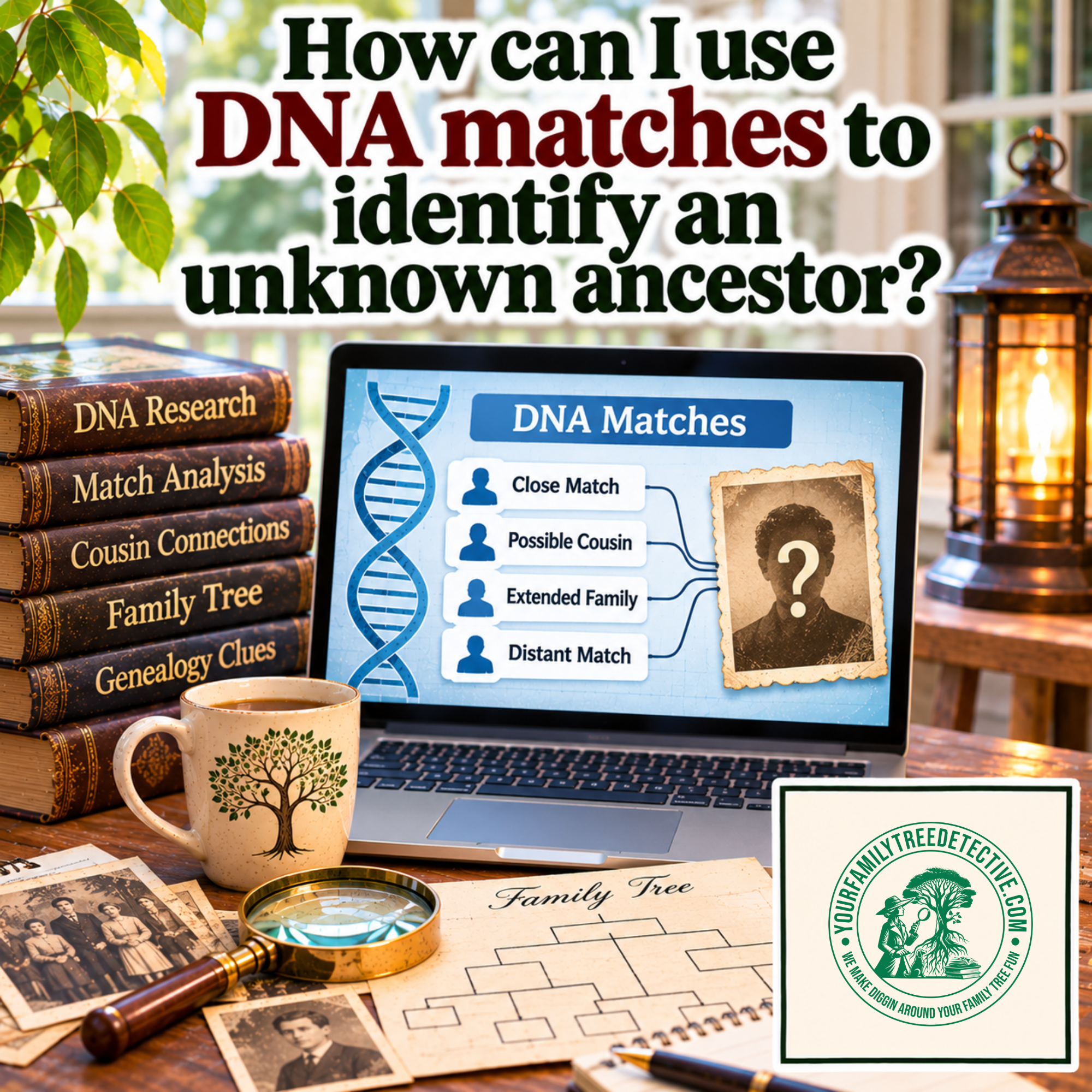
Have you ever looked at your family tree and discovered a mysterious blank space where an ancestor's name should be? Perhaps you have an unknown great-grandparent, a family member whose origins remain a mystery, or a branch of your family tree that seems to disappear without a trace. You've searched historical records, examined old photographs, and asked relatives for clues, but the answers still seem frustratingly out of reach. What if the key to solving that mystery is hiding in your DNA matches, waiting for you to discover how all those unfamiliar relatives fit together?
When you take an autosomal DNA test through a company such as AncestryDNA, MyHeritage, 23andMe, or FamilyTreeDNA, you may receive a list of people who share identifiable segments of DNA with you. These genetic connections are measured in centimorgans, abbreviated as cM, and the amount of shared DNA helps researchers estimate possible family relationships. Generally, the more DNA two people share, the closer their biological relationship is likely to be, although several different relationships can fall within similar ranges. Start by examining your closest unexplained matches, noting how much DNA you share, their estimated relationships, and whether their family trees contain surnames, locations, or ancestors that might connect to your mystery.
One of the most useful techniques in genetic genealogy is grouping DNA matches according to the relatives they have in common. Many testing platforms provide a shared matches feature, allowing you to identify people who match both you and another DNA relative, although the available tools and matching thresholds vary between companies. By comparing these groups with your known family tree, you may be able to separate matches associated with different ancestral branches and identify a group connected to your unknown ancestor. Techniques such as the Leeds Method can help organise certain groups of DNA matches, particularly when investigating grandparent-level ancestry, but remember that shared matches alone do not always prove that everyone inherited DNA from the same ancestor.
Once you've identified a promising group of DNA matches, the next step is to investigate their family trees and search for ancestors they may have in common. Look for repeated surnames, geographical locations, marriages, and family connections, then use birth, marriage, death, census, immigration, and other historical records to reconstruct the relationships between those individuals. For example, if several DNA matches descend from different children of the same ancestral couple, that couple may provide an important clue about where your unknown ancestor belongs in the family tree. However, identifying a shared ancestral couple is only part of the investigation, because you'll still need to determine which descendant could be your ancestor and whether the DNA evidence, historical records, dates, and locations support that conclusion.
Solving an unknown ancestor mystery using DNA requires patience, careful research, and a willingness to follow clues that sometimes lead in unexpected directions. DNA matches can reveal previously unknown biological relationships, adoption, unexpected parentage, or family connections that were never discussed, so it's important to approach potential discoveries with sensitivity and respect for everyone's privacy. When contacting DNA matches, introduce yourself politely, explain your research question, and remember that not everyone will feel comfortable sharing information or discussing unexpected family connections. Most importantly, combine your genetic evidence with documented family history, consider alternative explanations, and remember that every carefully verified discovery brings you one step closer to understanding the people and stories that shaped your family.
Today's Family Tree Challenge: If you've taken an autosomal DNA test, open your DNA match list and choose one unexplained match whose connection to your family tree you'd like to investigate. Record the amount of DNA you share, the estimated relationship, and any surnames or geographical locations appearing in their family tree. Examine your shared matches and look for connections to ancestors or family branches you've already documented, being careful not to assume that a shared match automatically identifies a common ancestor. Write down one research question suggested by your findings and identify a historical record that could help you investigate the connection further.
Let us know in the comments below about the stories you uncover.
Podcast Replay: https://youtube.com/live/dzhEM7Iqz4c?feature=share
Ready to uncover your own family story?