Porch Light Letters ·
How Do I Find My Ancestors' Birth, Marriage, and Death Records
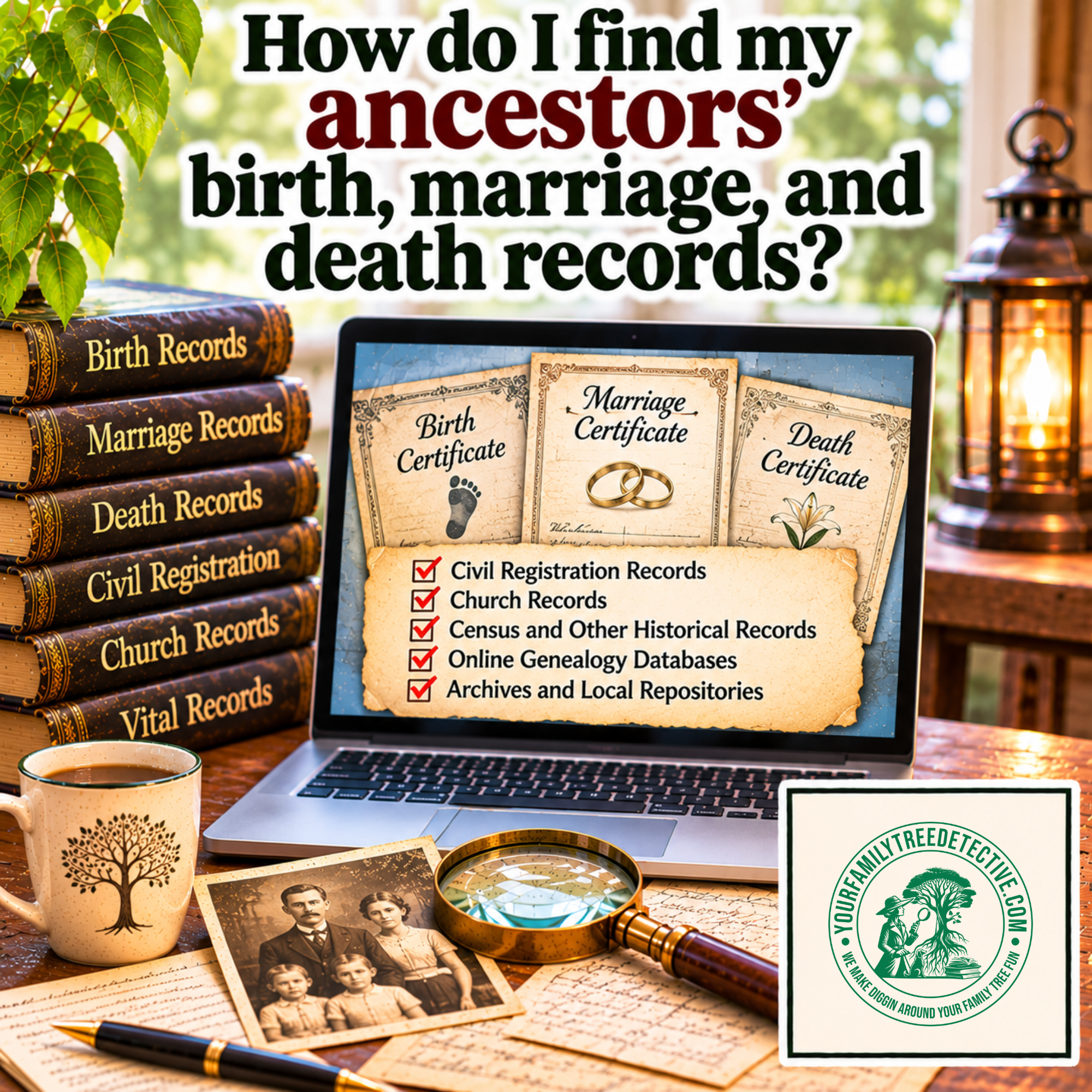
Have you ever wondered where your great-grandparents were born, when they got married, or where their final resting place might be? Perhaps you've inherited a family tree filled with names and dates, but you're not entirely sure whether the information is correct or where it originally came from. Birth, marriage, and death records are among the most valuable documents in genealogy because they can reveal important details about our ancestors and provide clues that connect one generation to another. So, where do you find these historical treasures, and how can three seemingly ordinary documents help you uncover extraordinary stories about your family?
Birth records are often the starting point for establishing an ancestor's identity, providing details such as their name, date and place of birth, and sometimes the names, occupations, or residences of their parents. Depending on the country and time period, these records may be held by government registration offices, churches, archives, or local authorities, and some historical collections are available through genealogy websites such as FamilySearch, Ancestry, Findmypast, and MyHeritage. If your ancestor was born before civil registration began in their country, baptismal registers, church records, family Bibles, and other historical sources may provide alternative evidence of their birth and family relationships. Remember that a baptism date is not necessarily a birth date, and information recorded on certificates can vary considerably between locations and historical periods.
Marriage records can be particularly useful because they often connect two family lines and may reveal information that helps identify earlier generations. Depending on the location and period, a marriage certificate or register might include the couple's names, ages, occupations, residences, marital status, parents' names, and the names of witnesses who could turn out to be relatives or close family connections. Start by searching civil marriage registrations, church marriage registers, and online historical record collections, using approximate dates and locations when exact details are unknown. Don't overlook marriage announcements in historical newspapers, marriage licences, banns, and other associated documents, because these sources may contain additional clues about family relationships, occupations, and the communities where your ancestors lived.
Death records can provide valuable information about the final chapter of an ancestor's life, while also revealing details that help connect earlier generations. Depending on the country and time period, death certificates may include the person's age, occupation, residence, cause of death, spouse, parents, or the name of the person who reported the death, although the accuracy of these details depends on the informant's knowledge. Cemetery registers, gravestones, funeral notices, obituaries, probate records, and burial registers can provide additional information, sometimes identifying relatives, former residences, or family connections that weren't previously known. When searching for death records, remember that an ancestor may have died somewhere other than their usual residence, and details such as ages or parents' names should be checked against other evidence rather than automatically accepted as correct.
So, what's the best way to begin finding your ancestors' birth, marriage, and death records without becoming overwhelmed by the enormous number of available resources? Start with one ancestor, gather everything you already know about their life, and identify the country, region, and approximate time period where each event may have occurred. Investigate when civil registration began in that location, search relevant online indexes and archives, and obtain copies of original registrations or certificates whenever possible, remembering that some records require payment or have access restrictions. Most importantly, compare the information across multiple sources, document where each discovery came from, and use every new name, date, location, or family relationship as another clue to help uncover the stories of your ancestors.
Today's Family Tree Challenge: Choose one ancestor in your family tree and identify whether you're missing their birth, marriage, or death information. Search a relevant genealogy website, government registration index, church register, or historical archive for a record connected to that event. Examine the information carefully, recording any names, dates, locations, occupations, or family relationships that could help you investigate further. Add your findings to your family tree with a source reference, and choose one new clue to explore in your next research session.
Let us know in the comments below about the stories you uncover.
Podcast Replay: https://youtube.com/live/CLAq7kVqysA?feature=share
Ready to uncover your own family story?