Porch Light Letters ·
What Do My Ancestry DNA Results Actually Mean
Have you ever taken an ancestry DNA test, eagerly waited for the results, and then stared at a colourful chart filled with percentages, regions, and unfamiliar names wondering what on earth it all means? Perhaps you were expecting to be mostly Irish, only to discover unexpected connections to Scandinavia, Eastern Europe, or somewhere you never imagined your ancestors had lived. Maybe you've even discovered a DNA match with someone you've never heard of, leaving you wondering how this complete stranger could possibly be related to you. So, what are your ancestry DNA results actually telling you about your family history, and how can you turn those mysterious percentages and matches into meaningful discoveries?
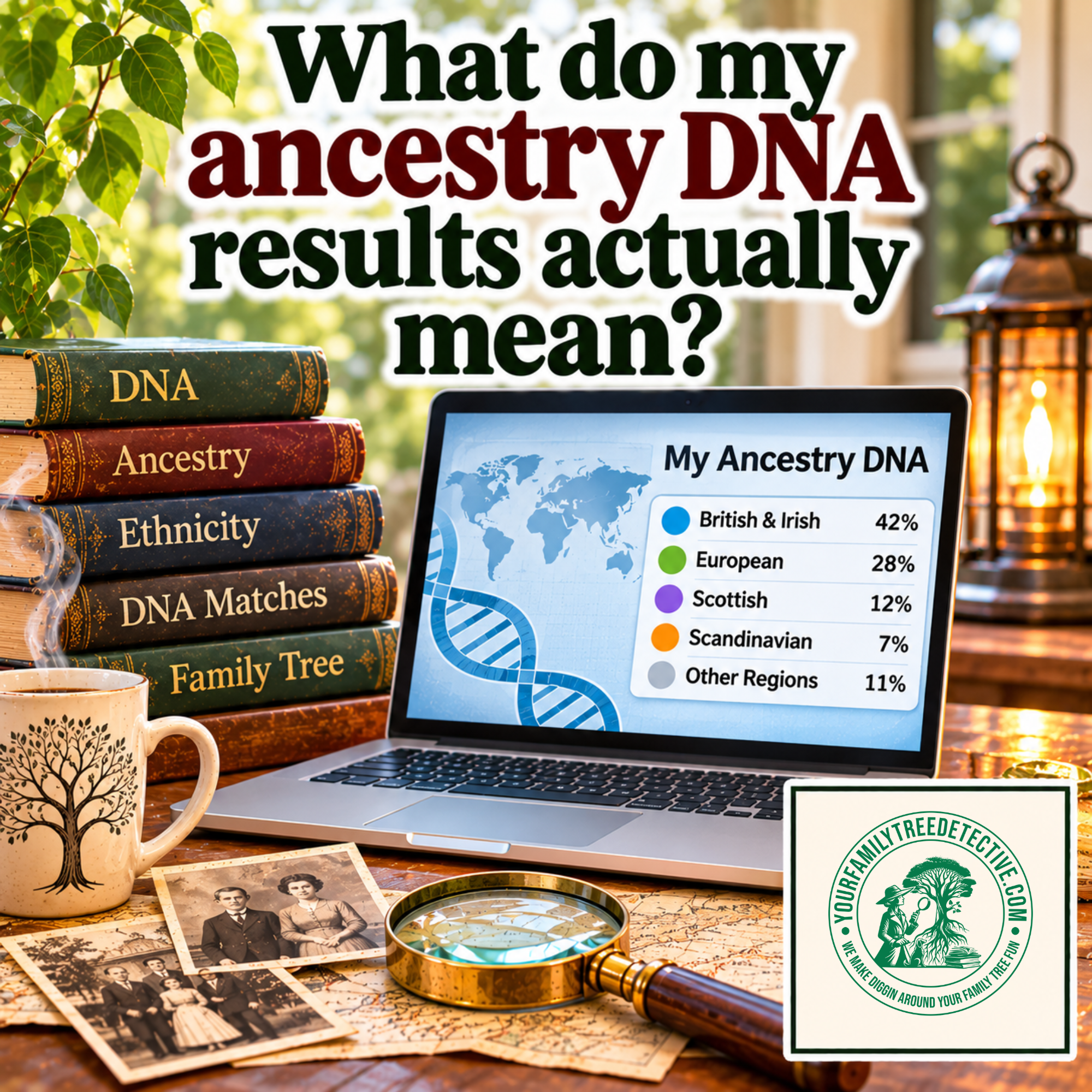
One of the first things you'll notice in your ancestry DNA results is an ethnicity estimate showing percentages associated with different geographical regions or populations. These percentages are calculated by comparing segments of your DNA with reference groups of people whose genetic ancestry is associated with particular regions, rather than directly identifying the nationalities of your ancestors. For example, a result showing 25% Scottish ancestry doesn't necessarily mean that exactly one of your grandparents was Scottish, because DNA is inherited in a random mixture and genetic populations often overlap geographical boundaries. It's also important to remember that these estimates can change as testing companies expand their reference databases, improve their methods, and refine how they identify genetic similarities between populations.
Another fascinating part of ancestry DNA testing is discovering your DNA matches, which are people who share identifiable segments of DNA with you. Testing companies measure these shared segments in units called centimorgans, often abbreviated as cM, and the amount of shared DNA helps estimate how closely two people might be related. A parent and child typically share approximately 50% of their DNA, while first cousins generally share around 12.5%, although the amount shared by more distant relatives can vary considerably. DNA matches can help you identify previously unknown relatives, confirm family connections, investigate missing branches of your family tree, and sometimes uncover unexpected information about biological relationships.
While DNA testing can provide remarkable clues, it doesn't automatically reveal the names, occupations, experiences, or personal stories of your ancestors. To understand how a DNA match fits into your family tree, you'll often need to combine genetic evidence with traditional genealogy research, including birth certificates, marriage records, census returns, immigration documents, family photographs, and historical newspapers. Shared matches, family trees, geographical connections, and the amount of DNA shared can help you investigate which ancestral line connects you to another person, but conclusions should be supported by additional evidence. It's also worth remembering that DNA results can reveal sensitive family information, including unexpected parentage or previously unknown relatives, so approach discoveries thoughtfully, respect people's privacy, and understand the testing company's privacy and data-sharing settings before contacting matches.
So, what should you do once you've received your ancestry DNA results and explored the colourful charts and lists of potential relatives? Start by treating your ethnicity estimates as clues about your broader ancestral background rather than definitive proof of where every ancestor came from, and focus on DNA matches that might help answer specific family history questions. Remember that different testing companies use different reference populations, databases, and matching methods, which means your results may look different across platforms, and some relatives may not appear simply because they haven't tested with the same service. Most importantly, think of DNA as another valuable tool in your genealogy detective kit, one that works alongside historical documents, family stories, and careful research to help uncover the people and connections that make your family history unique.
Today's Family Tree Challenge: If you've already taken an ancestry DNA test, open your results and choose one ethnicity estimate or DNA match that has sparked your curiosity. Review the information provided, including any shared DNA measurements, possible relationships, family trees, or geographical connections, and write down what you would like to investigate further. Compare those clues with your existing family tree and identify one historical record or family connection that could help you better understand the results. If you haven't taken a DNA test, explore how genetic genealogy works, consider the privacy implications, and write down one family history question that DNA testing might eventually help you answer.
Let us know in the comments below about the stories you uncover.
Podcast Replay: https://youtube.com/live/gube1Kp96M0?feature=share
Ready to uncover your own family story?