Porch Light Letters ·
Where Did My Ancestors Originally Come From
Have you ever looked at your family tree and wondered where your ancestors lived before they settled in the places your family calls home today? Perhaps you've heard stories about relatives arriving from Ireland, Scotland, Germany, or another distant country, but nobody seems to know exactly where their journey began. Maybe you've discovered an unfamiliar birthplace on an old certificate or a family surname that suggests connections to a part of the world you've never visited. So, how do you discover where your ancestors originally came from, and what fascinating stories might be waiting along the migration routes that brought your family to where it is today?
The first step in discovering your ancestral origins is to begin with what you already know and work backwards through each generation of your family tree. Talk with relatives about family traditions, ancestral homelands, languages, surnames, and stories of immigration or relocation that have been passed down through the years. Examine birth, marriage, and death certificates, census records, family Bibles, photographs, letters, and other documents that might identify where an ancestor was born or lived before moving elsewhere. Remember that a person's birthplace, nationality, ethnicity, and cultural identity are not necessarily the same thing, and political boundaries have changed considerably throughout history, meaning the country recorded in one document might have had a different name or government during your ancestor's lifetime.
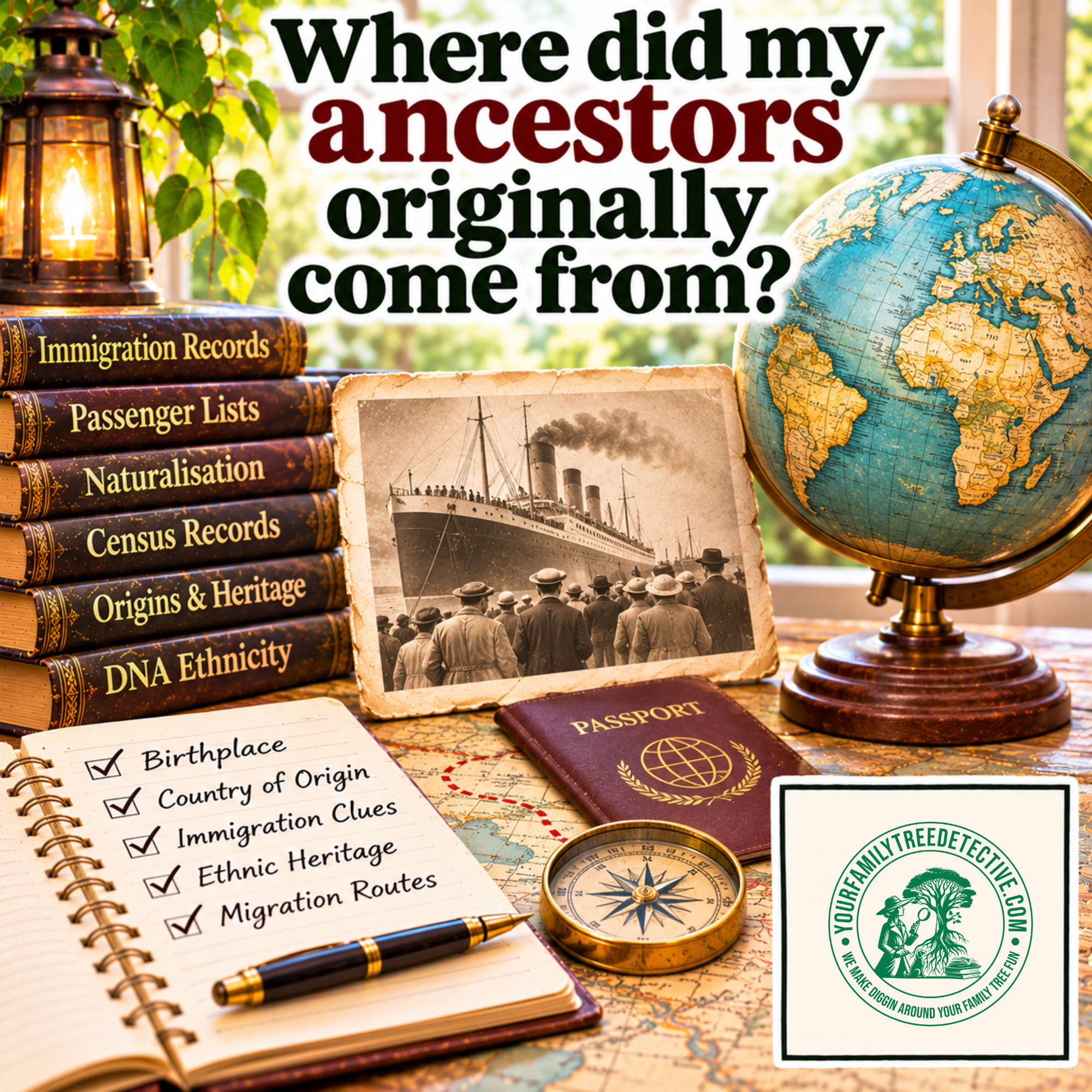
Immigration and migration records can provide valuable clues about the journeys your ancestors made and the places they left behind. Passenger lists, immigration files, naturalisation applications, passports, border-crossing records, and historical newspapers may reveal an ancestor's birthplace, previous residence, nationality, travelling companions, or intended destination, depending on the country and time period. Websites such as FamilySearch, Ancestry, Findmypast, and MyHeritage offer access to various immigration collections, while national archives, libraries, and historical societies may hold additional records that aren't available through major genealogy websites. If you discover the name of a town, village, or region connected to your ancestor, investigate its historical geography and local records because that location could lead you to church registers, civil registrations, land documents, and earlier generations of your family.
Another fascinating way to explore your ancestral origins is through the combination of historical maps, local history, surname research, and genetic genealogy. Old maps can help you understand changing borders, identify villages that have been renamed, and discover how communities developed, while local histories may explain the economic, social, or environmental circumstances that influenced migration. DNA ethnicity estimates can suggest connections to broader geographical populations, and DNA matches may help identify relatives whose documented family trees provide additional clues about shared ancestors and ancestral locations. However, surnames and DNA percentages alone cannot establish exactly where a particular ancestor originated, so always compare these clues with historical records and carefully documented family relationships before drawing conclusions.
Discovering where your ancestors originally came from is about much more than identifying a country on a map or adding another location to your family tree. It's an opportunity to understand the decisions, opportunities, hardships, traditions, and personal experiences that shaped the journeys of earlier generations, including those whose families remained in the same region for centuries. As you follow your ancestors through different towns, regions, and countries, take time to explore what everyday life was like in those places and consider how their experiences influenced the generations who followed. Most importantly, remember that every family has its own unique history of movement, settlement, and belonging, and tracing those connections can reveal remarkable stories that deserve to be preserved and shared.
Today's Family Tree Challenge: Choose one ancestor in your family tree whose birthplace or ancestral origins you'd like to investigate further. Review the historical records you already have and identify any clues about their birthplace, previous residence, nationality, or migration journey. Search for one additional document, such as a passenger list, census record, naturalisation application, or birth registration, that might help establish where they came from. Record your findings, locate the place on a historical or modern map, and identify one new question about your ancestor's life or journey that you'd like to explore.
Let us know in the comments below about the stories you uncover.
Podcast Replay: https://youtube.com/live/68zPI1M4W3A?feature=share
Book a 15-minute Free Discover Call with us…
Ready to uncover your own family story?