
Porch Light Letters ·
Where Was Your Family When… Peace Was Declared
After years of uncertainty, separation, sacrifice, and waiting, imagine hearing the words families had desperately hoped for: the war was over. Peace had finally been declared.
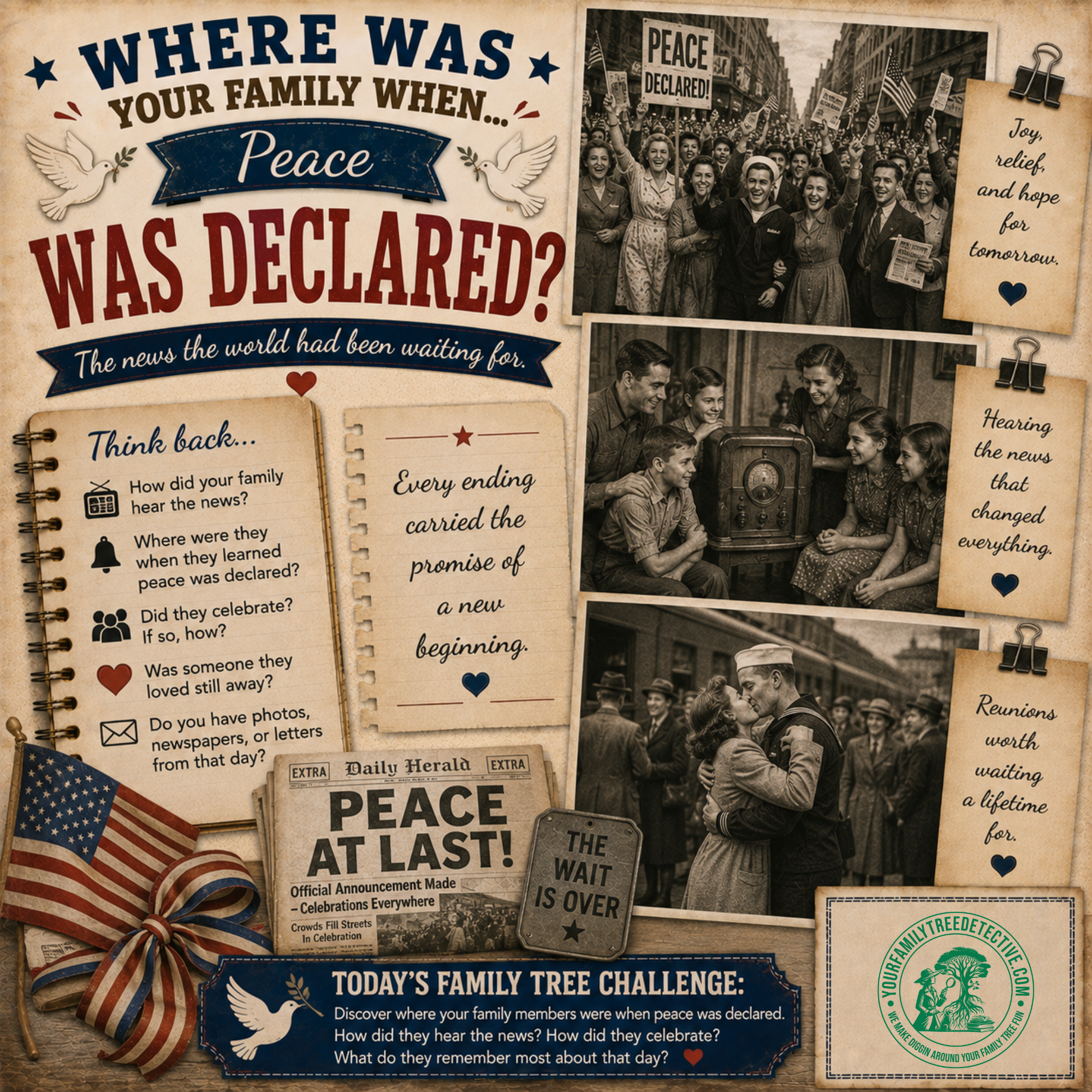
How did your family hear the news? Perhaps an announcement came over the radio. Church bells rang. Factory whistles sounded. Newspaper headlines appeared in the streets. A neighbour may have rushed through the door shouting the news, or word may have travelled from house to house until an entire community knew something extraordinary had happened.
For many people, the reaction was immediate. Crowds gathered in town centres and streets. Strangers celebrated together. People sang, danced, waved flags, hugged one another, and filled public spaces that only hours earlier had been part of an ordinary day. After years of restrictions and worry, people finally had permission to celebrate.
But peace could bring complicated emotions too. For families with someone serving overseas, the war being over didn't mean their loved one would immediately walk through the front door. There could still be weeks or months of waiting before servicemen and women returned home.
For other families, someone would never be coming home. Peace may have brought enormous relief while also making their loss feel even more real. Around them, families were preparing for reunions while they were learning how to move forward without the person they had lost.
Then there were the servicemen and women themselves. Where were they when they heard the news? Some were thousands of miles from home. Did they celebrate with the people beside them? Did their thoughts immediately turn to home? Did they wonder how soon they would be discharged and when they might finally see their families again?
The end of war also marked the beginning of another enormous transition. People returned home, marriages took place, families were reunited, babies were born, careers restarted, homes were built, and communities adjusted to peacetime again. For many families, decisions made during those first few years of peace shaped everything that followed.
Look for photographs of local celebrations, newspaper reports, letters, diaries, military records, scrapbooks, and family stories. Local newspapers can be especially valuable because they may describe exactly how the community celebrated, where people gathered, and what happened that day.
Today's Family Tree Challenge: Find out where your family members were when they learned that peace had been declared. How did they hear the news? Who were they with? Did they join a public celebration or stay at home? Was someone they loved still serving overseas? Did they keep a newspaper, photograph, letter, or other memento from the occasion? Most importantly, ask what they remembered feeling when they realised the war was finally over.
History records the date peace was declared. Family history tells us what that moment felt like to the people who lived it.
Let us know in the comments below about the stories you uncover.
Podcast Replay:
Ready to uncover your own family story?