Porch Light Letters ·
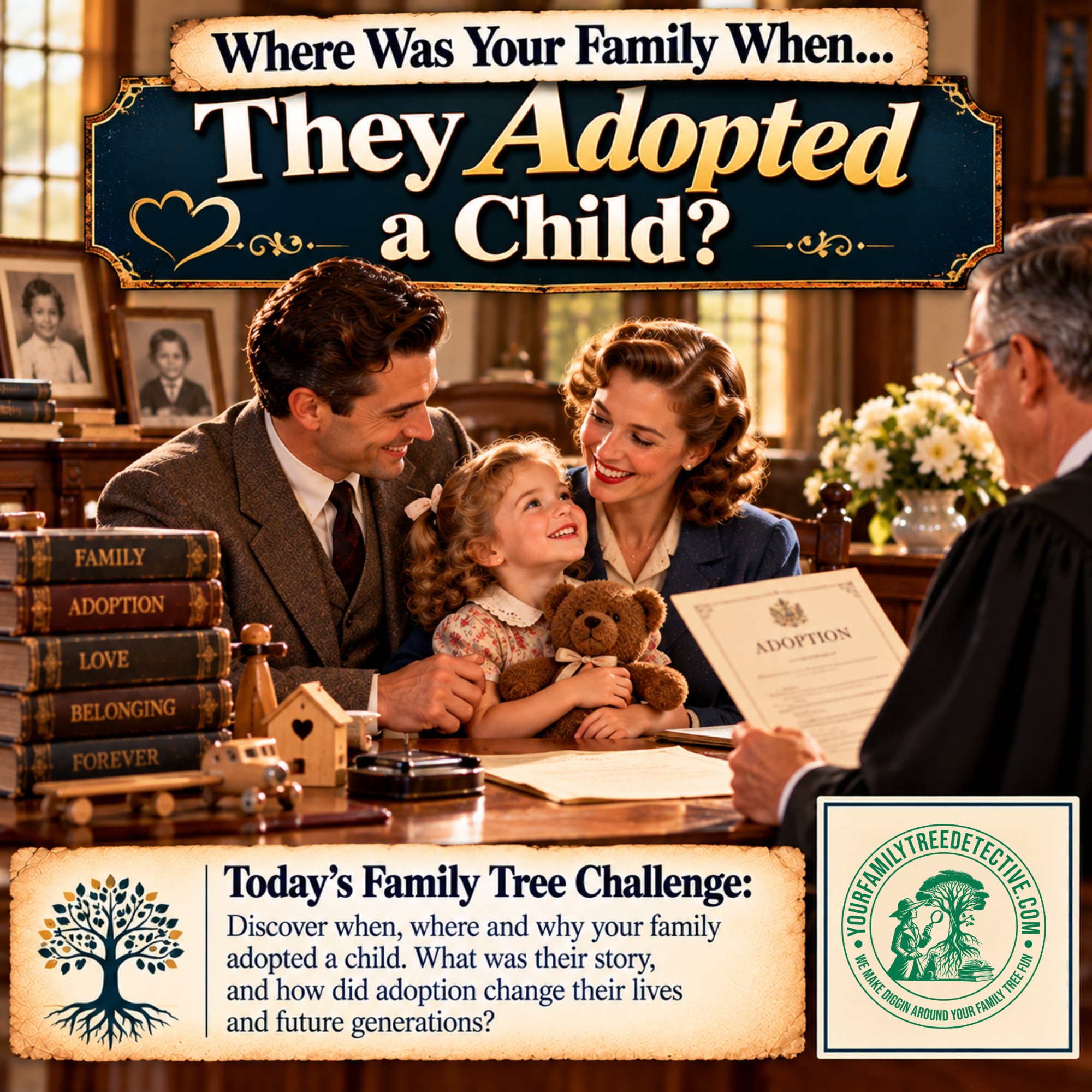
Where Was Your Family When… They Adopted a Child
Adoption can create an entirely new branch of a family's story. It can bring together people who were born into different families but whose lives became permanently connected through love, commitment, circumstance, and the decision to become a family.
Do you know whether someone in your family was adopted or adopted a child? Perhaps the adoption happened when the child was a baby, or maybe an older child joined the family. A stepparent may have legally adopted a child they had already been raising for years. In other cases, grandparents, aunts, uncles, or other relatives stepped forward when a child needed a home.
The word "adoption" may not always appear in older family stories or records. Children were sometimes raised by relatives or another family without a formal legal adoption ever taking place. A census record might describe someone as a niece, nephew, boarder, foster child, servant, or simply a member of the household, even though within the family they were considered a son or daughter.
Look carefully at the timeline. When did the child first appear with the family? Where were they living beforehand? Does their surname suddenly change? Are the people listed as their parents on later records different from those on their birth record? Following the child from one record to another may gradually reveal how and when their family circumstances changed.
Adoption records themselves can be complicated. Access rules vary considerably depending on the country, time period, type of adoption, and whether records remain restricted or sealed. Even when the original adoption file isn't available, other documents may provide clues. Birth records, court records, guardianship files, census returns, school records, passenger lists, wills, newspapers, family Bibles, letters, photographs, and obituaries can all help reconstruct the story.
Pay attention to the people surrounding the child. Witnesses, guardians, neighbours, godparents, and extended relatives may turn out to be important. A child described as being adopted by strangers may actually have been placed with cousins or another branch of the biological family.
Then there are the stories that may never have appeared in an official record. Who chose the child's name? What was their first day in the family home like? Were there siblings waiting to meet them? Was there a favourite toy, blanket, photograph, or other object connected with their arrival? These seemingly small details can become some of the most meaningful parts of the family's history.
For some adoptees, discovering their biological family becomes an important part of understanding their own story. DNA testing and modern genealogy research have made it possible to identify biological relatives in situations where traditional records could not provide the answers. Those discoveries can bring new relationships and information, but they can also uncover complicated or unexpected family circumstances, so this is an area where sensitivity and respect for everyone's privacy are especially important.
Remember that an adoptee has more than one family history worth preserving. Their biological ancestry is part of their story, but so are the people who raised, loved, influenced, and shared their lives with them. Genealogy doesn't have to choose one family over another. Both can help explain who that person became.
If you are interviewing someone who was adopted, allow them to decide how much of their story they want to share. Some people openly celebrate their adoption story, while others consider parts of it deeply private. Our role as family historians isn't to force every secret into the family tree. It is to preserve the stories entrusted to us with care.
Today's Family Tree Challenge: Look through your family tree for someone who was adopted, fostered, raised by relatives, became a stepparent who adopted a child, or welcomed a child into their family in another way. When did the child join the household? Who raised them? What records can you find? Most importantly, what stories have been passed down about the people who became their family?
Look at old photographs too. When does the child first begin appearing in family pictures? Who are they sitting beside? Who is holding them? Which grandparents, aunts, uncles, cousins, and siblings surround them? Sometimes a photograph captures something a legal document never could: the moment someone quite simply belonged.
Family trees are built from more than biological connections. They are also shaped by the people who showed up, opened their homes, raised children, created traditions, shared ordinary days, and chose to call one another family.
Let us know in the comments below about the stories you uncover.
Podcast Replay: https://youtube.com/live/-Q5I8ln6cTs?feature=share
Ready to uncover your own family story?