Porch Light Letters ·
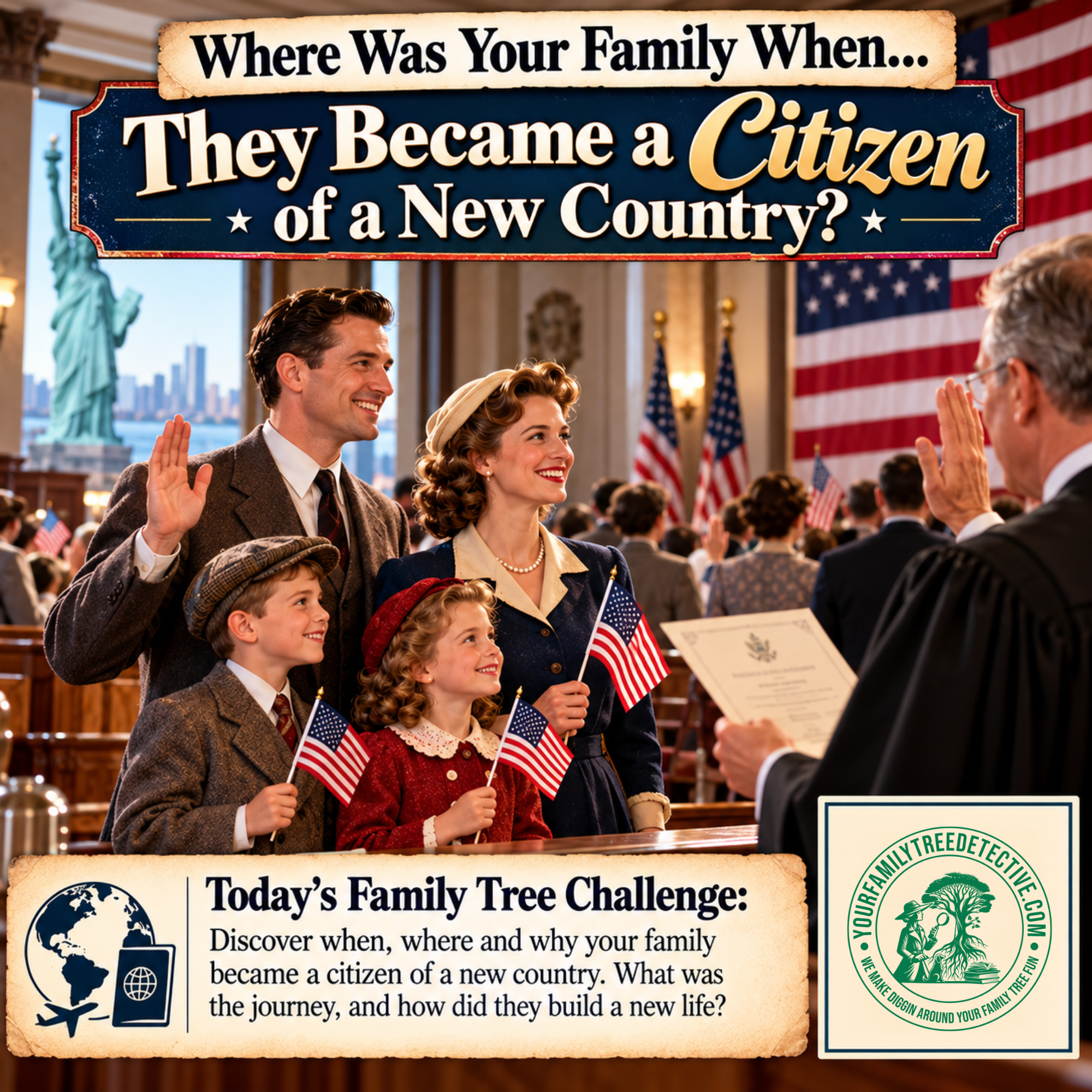
Where Was Your Family When… They Became a Citizen of a New Country
Becoming a citizen of a new country can represent the final step in a journey that began years, sometimes decades, earlier. Before the certificate, ceremony, oath, or celebration came the decision to leave one country, establish a home somewhere else, and eventually make that new country legally their own.
Do you know whether someone in your family became a naturalised citizen? Perhaps your ancestor arrived as an immigrant looking for work, travelled to join relatives who had already settled there, married someone from another country, escaped difficult circumstances, or simply believed there were greater opportunities somewhere else.
Start with the journey that brought them there. Where were they born? When did they leave? Did they travel alone or with family? Did they arrive by ship, train, aeroplane, or cross a land border? What possessions did they bring with them, and what people and places did they leave behind?
Then ask how long they lived in their new country before becoming a citizen. Citizenship laws have changed significantly over time and differed from one country to another. Depending on when and where your ancestor lived, there may have been residency requirements, declarations of intention, applications, witnesses, interviews, court appearances, oaths, or other steps before citizenship was granted.
Naturalisation records can be genealogy goldmines. Depending on the country and time period, they may include an ancestor's full name, birthplace, birth date, occupation, address, date of arrival, ship name, spouse, children, photograph, signature, and other details. Sometimes the information in a citizenship file can lead directly to records in the country they left behind.
Pay particular attention to names. Did your ancestor use the same name before and after becoming a citizen? Some immigrants changed the spelling of their surname, adopted an English version of their given name, or began using a completely different name. Citizenship and naturalisation records may help connect those different identities.
What did becoming a citizen mean to them personally? Was it something they had worked towards for years? Did the family celebrate afterwards? Was there a special meal, photograph, certificate, flag, newspaper announcement, or story about the day? If someone in your family remembers attending a citizenship ceremony, record their memories of what happened and how everyone felt.
Citizenship could also bring new rights and responsibilities. Depending on the country, time period, and the laws that applied to that person, naturalisation could affect voting rights, property ownership, employment opportunities, passports, military obligations, and the legal status of other members of the family.
Be careful not to assume that everyone in a household became a citizen at the same time. Historically, citizenship and naturalisation laws often treated husbands, wives, and children differently, and those rules changed over time. One family may therefore have several different citizenship stories hidden within the same generation.
Look for clues beyond naturalisation documents. Census records may identify citizenship status or year of naturalisation. Electoral rolls, passenger lists, passports, border-crossing records, military files, newspapers, court records, and immigration documents can help you follow the journey from arrival to citizenship.
Then look at what happened afterwards. Did your ancestor remain in their adopted country for the rest of their life? Did they ever return to visit the country where they were born? Did other relatives follow them? Perhaps one person's decision to immigrate and eventually become a citizen changed where generations of the family would be born, grow up, marry, and build their lives.
Today's Family Tree Challenge: Choose an ancestor who moved to another country and find out whether they ever became a citizen. When did they arrive? How long did they wait before applying? What records survive from the process? Look for their naturalisation papers, declaration of intention, citizenship certificate, passport, census entries, electoral records, photographs, newspaper articles, and family stories.
If you find the documents, don't stop with the dates. Look at the signature. Study the photograph. Read the addresses and occupations. Identify the witnesses. Research the laws that applied at the time. Every detail can help you understand the person behind the paperwork and what becoming a citizen may have meant in their life.
A citizenship certificate may record one particular day, but the story behind it can stretch across oceans, borders, languages, cultures, and generations. For many families, that single decision helped determine where their descendants would eventually call home.
Let us know in the comments below about the stories you uncover.
Podcast Replay: https://youtube.com/live/j1RnwU5oipw?feature=share
Ready to uncover your own family story?