Porch Light Letters ·
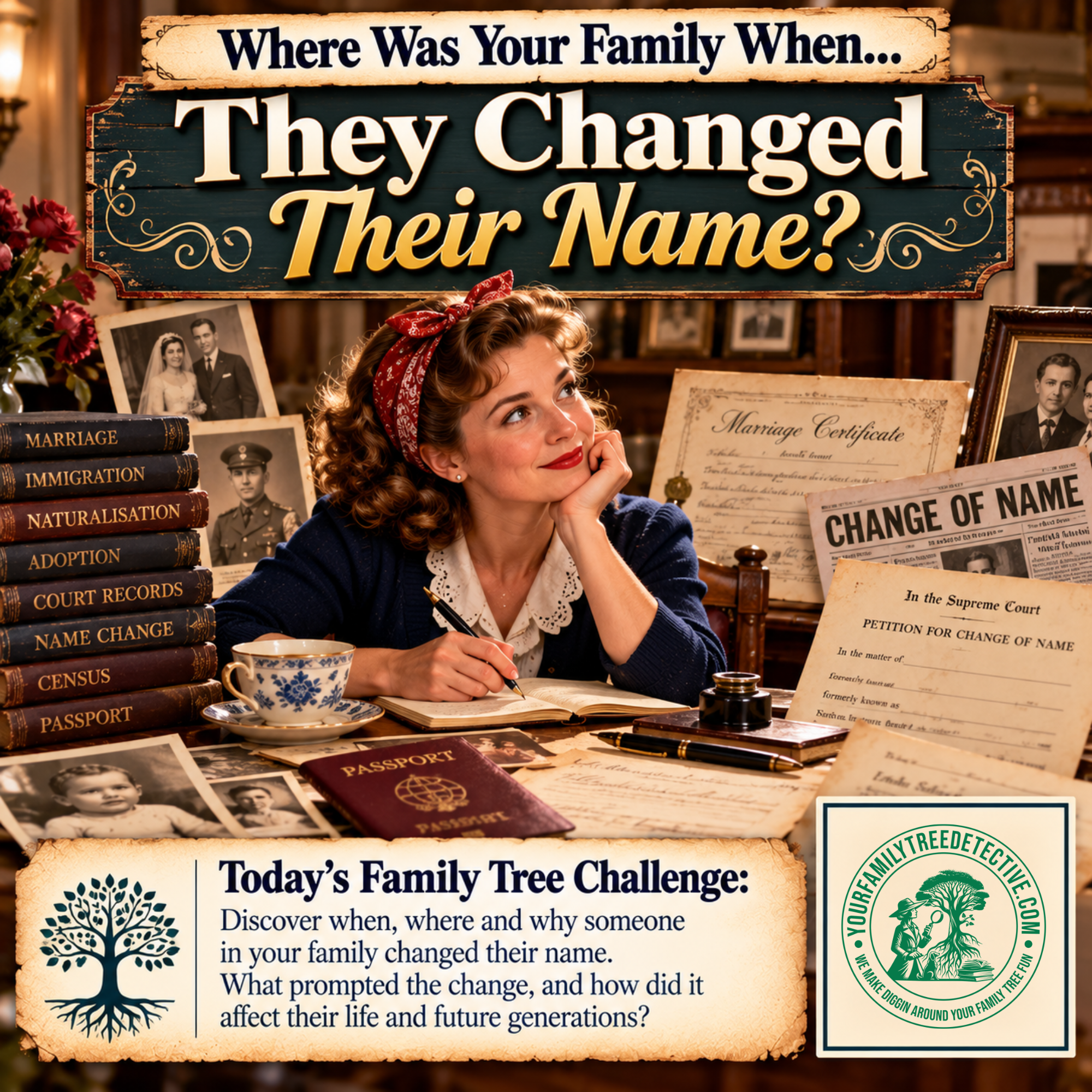
Where Was Your Family When… They Changed Their Name
A name is one of the first pieces of information we search for when researching our family tree. But names aren't always as permanent as we imagine. Somewhere in your family history, someone may have changed their first name, surname, spelling, or even their entire identity, leaving behind a trail of records that can be fascinating and sometimes frustrating to follow.
Do you know whether anyone in your family changed their name? Marriage may be the first reason that comes to mind, but there are many others. Immigration, adoption, divorce, remarriage, cultural traditions, personal preference, family disagreements, professional careers, and the desire for a fresh start could all lead someone to begin using a different name.
Immigration can create particularly interesting name mysteries. An ancestor may have altered the spelling or pronunciation of their name to make it easier to use in their new country. Sometimes a given name was translated or replaced with a local equivalent. In other cases, the change wasn't deliberate at all. Clerks, census takers, immigration officials, employers, and other record keepers could spell a name differently simply because they heard or interpreted it differently.
Before assuming your ancestor officially changed their name, follow them through as many records as possible. A person might appear under several variations throughout their lifetime without ever completing a formal name change. Search using different spellings, initials, nicknames, middle names, maiden names, and even phonetic versions of the surname.
Marriage can create another trail of identities, particularly for women. Don't allow a married surname to hide the earlier chapters of someone's life. Finding a maiden name can open the door to an entirely new branch of your family tree, including parents, siblings, grandparents, and generations you couldn't previously identify.
Adoption, fostering, guardianship, and blended families can also result in surname changes. A child may begin using the surname of an adoptive parent, stepfather, guardian, or another family member. Sometimes official records document the change clearly. Other times, the child simply begins appearing under a different surname, leaving the family historian to work out what happened.
There may also be a story behind someone deliberately choosing a completely new name. Were they separating themselves from a difficult past? Starting a new life after moving somewhere else? Reconnecting with their heritage? Choosing a professional or stage name? Perhaps there was a family dispute that caused someone to stop using the family surname altogether.
Look carefully at signatures. A birth certificate, marriage record, military document, passport, naturalisation record, will, or letter may allow you to see how the person actually wrote their own name. That can be particularly valuable when official records contain several different spellings.
Newspapers can provide unexpected clues too. Legal name-change notices, marriage announcements, business advertisements, court proceedings, obituaries, social columns, and community news may connect an old name with a new one. A tiny phrase such as "formerly known as" can suddenly solve a mystery that has been blocking your research for years.
Pay attention to when the change occurred. Create a timeline showing every version of the person's name and the records where each one appears. You may discover that the change happened around the same time as a marriage, migration, adoption, new job, military service, family separation, or another significant event.
Then ask whether the original name survived somewhere else in the family. It may have become a child's middle name, been passed down as a given name, appeared in a business name, or resurfaced generations later. Sometimes the name we think disappeared was quietly preserved in another form.
Today's Family Tree Challenge: Find someone in your family whose name changed or appeared differently across the records. Write down every version you can find and place them in chronological order. When does the change first appear? What was happening in that person's life at the time? Search birth, marriage and death records, census returns, electoral rolls, immigration and naturalisation files, adoption records, court documents, passports, newspapers, directories, wills, photographs, letters, and family Bibles for clues.
Most importantly, don't immediately decide that two differently named people must be two different individuals. Compare their dates, locations, occupations, relatives, addresses, and other identifying details. That unexpected name variation may be exactly the clue you need to break through a family history brick wall.
A changed name can hide an ancestor from us, but it can also reveal an extraordinary story. Discovering why someone changed their name may tell us about migration, marriage, family relationships, identity, opportunity, hardship, or a decision that influenced how every generation after them would be known.
Let us know in the comments below about the stories you uncover.
Podcast Replay: https://youtube.com/live/SIkcYyzODJk?feature=share
Ready to uncover your own family story?