
Porch Light Letters ·
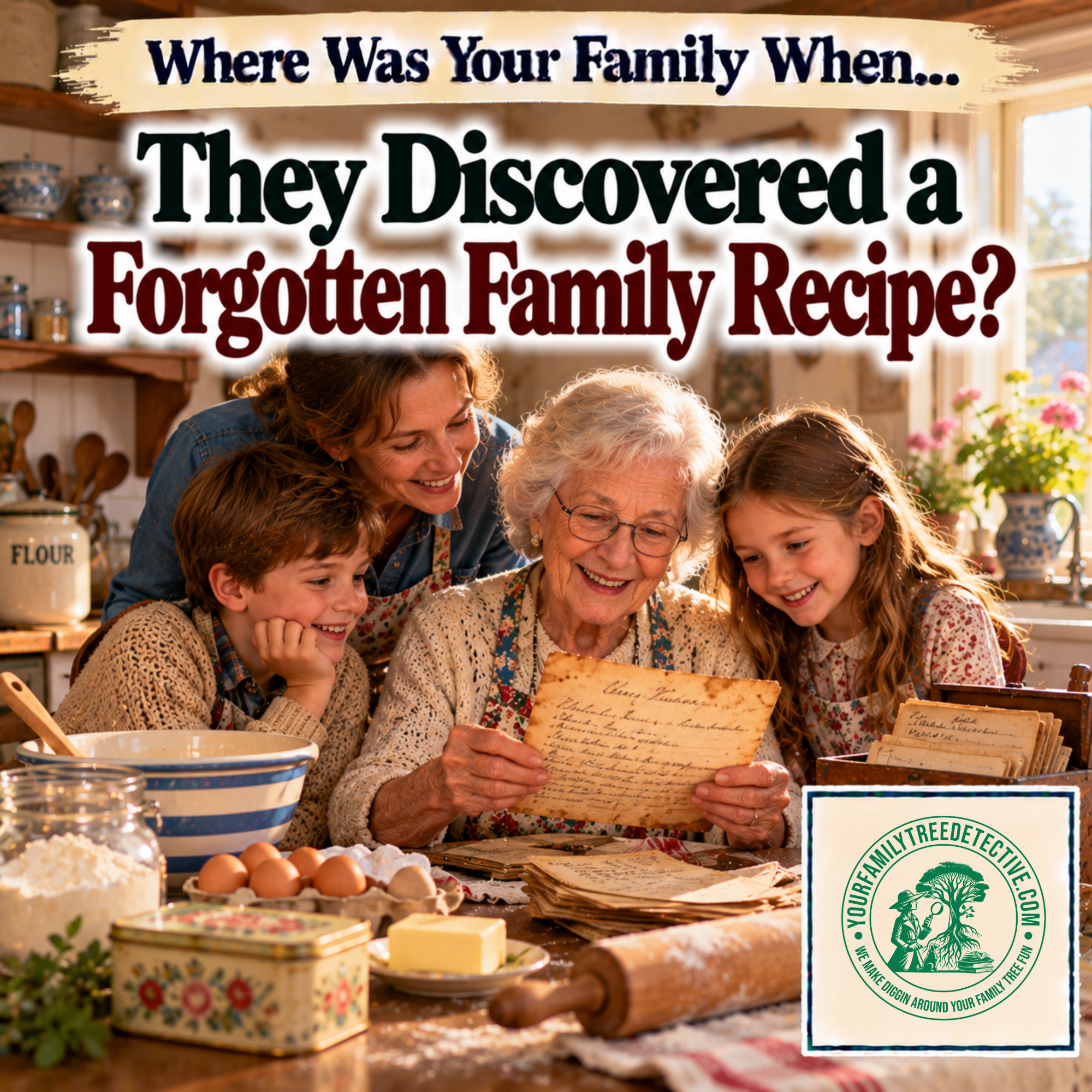
Where Was Your Family When… They Discovered a Forgotten Family Recipe
Imagine opening an old recipe book that belonged to your grandmother and discovering a handwritten recipe tucked between its yellowed pages. The paper is stained with flour and butter, the handwriting is unmistakably hers, and suddenly you remember the delicious smells that once filled her kitchen. Perhaps it's a Christmas pudding, a treasured family cake, a favourite Sunday dinner, or a special dish that nobody has made since she passed away. What if that forgotten recipe could bring back more than a familiar flavour and reveal a wonderful story about your family's past?
For generations, family recipes have been passed down through handwritten notebooks, recipe cards, treasured cookbooks, and conversations around the kitchen table. Many of our ancestors learned to cook by watching their mothers, grandmothers, fathers, or other relatives prepare meals using ingredients that were readily available in their communities. Measurements weren't always precise, with instructions such as a handful of flour, a pinch of salt, or enough milk to make the mixture feel right appearing frequently in older recipes. These cooking traditions often travelled with families when they moved to new towns or emigrated overseas, helping preserve a connection to the places, people, and customs they had left behind.
Sometimes a forgotten family recipe can reveal fascinating details about the circumstances in which our ancestors lived. During periods of economic hardship, wartime rationing, or food shortages, families developed creative ways to prepare satisfying meals using whatever ingredients they could obtain. Recipes might have been adapted when certain foods were unavailable, when families moved to different countries, or when new ingredients became part of everyday cooking. A recipe handed down through several generations may therefore tell a story of resourcefulness, cultural traditions, changing tastes, and the remarkable ability of families to make the most of what they had.
For family historians, old recipes can provide unexpected clues about relationships, occupations, migrations, and important family celebrations. A handwritten recipe might include the name of the relative who originally shared it, a date identifying when it was recorded, or a note explaining that it was traditionally prepared for weddings, birthdays, Christmas, or other special occasions. Comparing family recipes with historical cookbooks, local food traditions, and the places where ancestors lived can sometimes reveal connections to particular communities or cultural backgrounds. Even the handwriting, food stains, handwritten corrections, and little comments in the margins can provide wonderful insights into the personalities and everyday experiences of the people who used them.
One of the greatest joys of rediscovering a forgotten family recipe is the opportunity to bring an old tradition back to life. Imagine gathering several generations in the kitchen to recreate a dish that your great-grandmother once prepared, sharing memories of family celebrations while familiar aromas fill the house. Cooking together creates opportunities to ask questions, record stories, photograph treasured recipe cards, and discover the little techniques that may never have been written down. By preserving both the recipe and the memories associated with it, we can ensure that future generations inherit more than a collection of ingredients and instructions, because they receive another meaningful connection to their family's history.
Today's Family Tree Challenge: Search through old family cookbooks, recipe boxes, handwritten notebooks, or collections of loose papers for a recipe that hasn't been prepared in years. Find out who originally made it, when it was served, and whether any relatives remember the special occasions or family traditions associated with it. Ask family members about missing ingredients, unusual measurements, or cooking techniques that might help you recreate the dish. Photograph the original recipe, record its history, and consider preparing it with your family so the tradition can be enjoyed by another generation.
Let us know in the comments below about the stories you uncover.
Podcast Reply: https://youtube.com/live/kDGevtBBK1I?feature=share
Ready to uncover your own family story?