Porch Light Letters ·
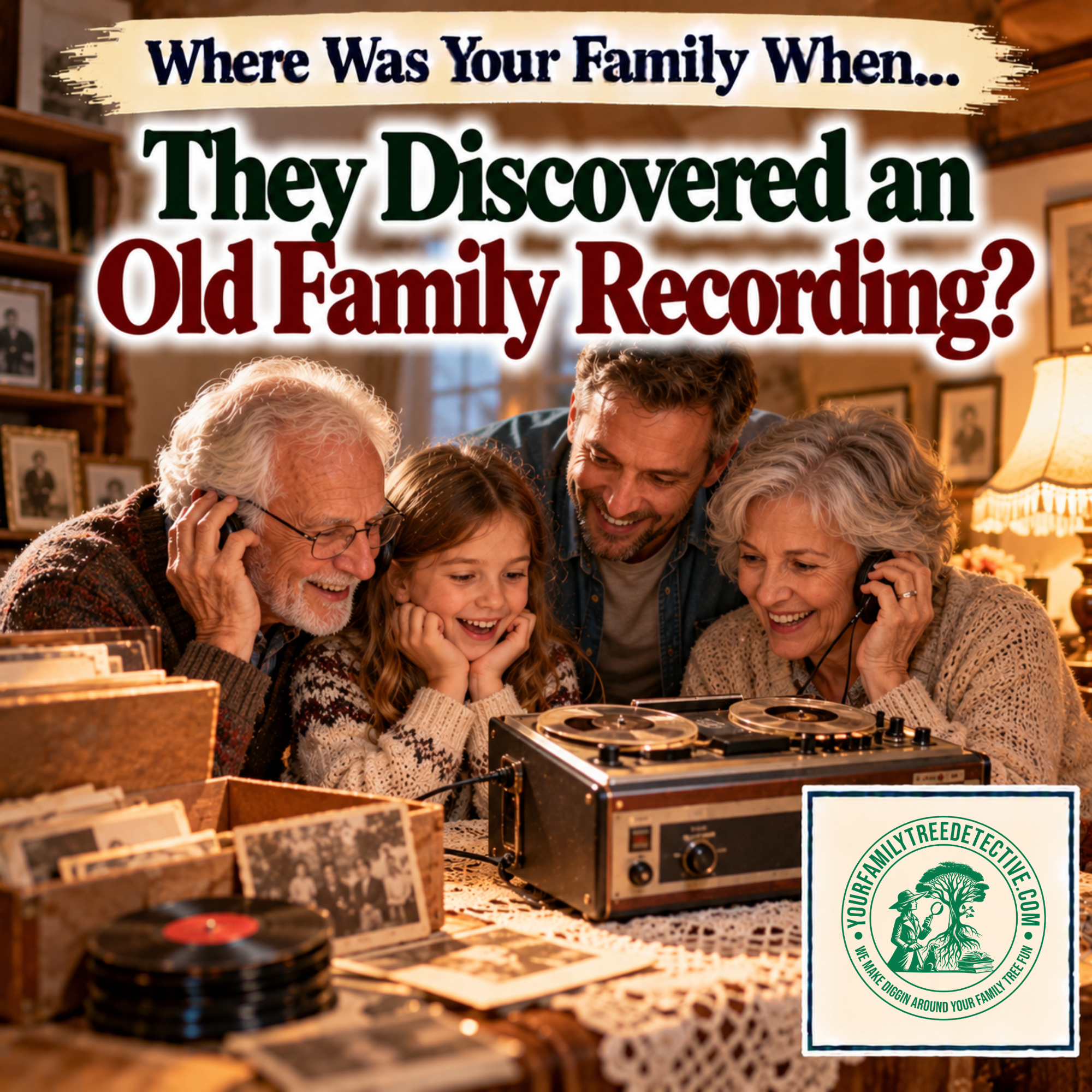
Where Was Your Family When… They Discovered an Old Family Recording
Imagine opening a dusty box in the attic and discovering an old cassette tape, reel-to-reel recording, or forgotten home movie that nobody has played in decades. After finding a way to play it, you suddenly hear a familiar voice belonging to someone who passed away many years ago, or perhaps an ancestor you never had the opportunity to meet. There's their laughter, their accent, the way they pronounced certain words, and maybe even a story you've heard repeated at family gatherings but never heard them tell themselves. What would it mean to hear your great-grandparents speaking, your grandparents singing, or your parents laughing together when they were young?
For generations, families have used recording technology to capture moments they wanted to remember long after the occasion had passed. Early phonographs, wire recorders, reel-to-reel tape machines, cassette recorders, and eventually video cameras allowed ordinary people to preserve voices, music, conversations, and family celebrations. Some families recorded birthday parties, weddings, Christmas gatherings, and children singing their favourite songs, while others captured interviews with elderly relatives or messages sent to loved ones living overseas. These recordings became extraordinary treasures because they preserved something that photographs and written documents could never fully capture, the actual sounds, expressions, and personalities of the people who came before us.
Sometimes the most fascinating discoveries are recordings that nobody remembers making or that have been forgotten for generations. Imagine hearing your grandfather telling a childhood story, your grandmother describing her wedding day, or a great-uncle recounting his experiences of travelling to another country. Perhaps the recording contains a family member playing a musical instrument, a baby taking their first steps on an old home movie, or relatives sharing jokes and laughter around the dinner table. Even the background sounds, familiar household noises, music playing on the radio, or conversations between family members can reveal fascinating details about everyday life during a particular period.
For genealogists, old recordings can provide valuable information that might never appear in official records or written family histories. A relative might mention an unfamiliar family name, describe a childhood home, explain why the family moved, or recall an event that helps solve a long-standing research mystery. Accents, expressions, traditional songs, and stories told in ancestral languages can also reveal important connections to the places and cultures from which our families originated. However, older recording formats can be fragile, and magnetic tapes, film reels, and other media may deteriorate over time, making careful handling and professional digitisation particularly important when preserving irreplaceable family memories.
One of the most emotional experiences in family history research can be hearing the voice of someone we thought we would never hear again. A recording allows us to experience a person's humour, warmth, enthusiasm, and individuality in a way that names, dates, and even photographs cannot fully convey. Sharing these recordings with children and grandchildren creates a remarkable connection between generations, allowing younger family members to hear the voices and witness the personalities of ancestors they may never have known. By identifying the people involved, recording the circumstances surrounding each recording, and preserving digital copies in more than one safe location, we can ensure these precious voices and memories remain part of our family's story for generations to come.
Today's Family Tree Challenge: Search your family's old boxes, cupboards, and collections for cassette tapes, reel-to-reel recordings, home movies, or other forgotten audio and video treasures. Ask relatives whether they remember any recordings of family celebrations, conversations, songs, or interviews with older generations. If you discover something, identify the people involved, determine when it was recorded, and investigate how it can be safely played or digitised. Preserve a copy, record the story behind the recording, and add this special piece of your family's history to your genealogy collection.
Let us know in the comments below about the stories you uncover.
Podcast Replay: https://youtube.com/live/nB5Qzr2Lzq0?feature=share
Ready to uncover your own family story?