Porch Light Letters ·
Where Was Your Family When… They Entered Something in a Fair or Show
Fairs and agricultural shows have been gathering places for generations. They were opportunities for communities to come together, catch up with neighbours, enjoy entertainment, and, perhaps most importantly, find out who really did grow the biggest pumpkin, bake the best cake, raise the finest animal, or create the most beautiful handiwork.
Did someone in your family ever enter something in a local fair, agricultural show, county fair, school fair, flower show, craft exhibition, or other community competition? Perhaps your grandparents proudly displayed vegetables from their garden, your great-grandmother entered her preserves, or a child spent weeks preparing an animal for the show ring.
The variety of competitions could be enormous. Families might enter livestock, poultry, fruit, vegetables, flowers, preserves, baking, sewing, knitting, embroidery, quilting, woodworking, photography, artwork, collections, or handmade crafts. Children's sections could include everything from handwriting and school projects to decorated cakes and carefully grown vegetables.
What someone entered can tell you something about their everyday life. A prize-winning loaf of bread may point towards skills used daily to feed a family. A beautifully embroidered tablecloth could represent hundreds of hours of work. Prize vegetables might reveal an ancestor who took enormous pride in the family garden, while livestock awards could tell you about generations spent farming.
Then there was the preparation. How long did they work on their entry? Was there a treasured recipe involved? Did someone have a secret growing technique? Were children taught how to groom and handle an animal by their parents or grandparents? The knowledge behind an entry may have been passed from one generation to another long before anyone thought of it as family history.
And, of course, everyone wanted to know the results. Did your relative win first prize, receive a ribbon, earn a highly commended certificate, or go home determined to beat the neighbour next year? Perhaps they never won anything at all but entered faithfully every year because participating was simply part of the family tradition.
Look around the family home for surviving prizes. Ribbons, certificates, trophies, medals, plaques, cups, and photographs may still be tucked into drawers or boxes without anyone remembering exactly why they were awarded. Before those objects become separated from their stories, photograph them and record who won them, when, where, and for what.
Old photographs can provide wonderful clues too. Look for relatives standing beside livestock, posing proudly with enormous vegetables, displaying flowers, holding ribbons, or standing beside tables covered with baking and preserves. Even if nothing is written on the photograph, signs, buildings, clothing, banners, and other details may help identify the event and approximate date.
Newspapers are particularly valuable for this topic. Local papers often published detailed results from fairs and agricultural shows, sometimes listing every category, entrant, and prize winner. Your ancestor's name may appear alongside exactly what they entered and where they placed.
Don't overlook show programmes, catalogues, entry forms, agricultural society records, club newsletters, and local archives. These can reveal not only what your ancestor entered but also the other people competing alongside them. Familiar surnames may lead you to neighbours, cousins, friends, and other connections within the community.
Fairs were also social occasions. Families travelled into town, children explored the attractions, neighbours caught up with one another, and young people had opportunities to meet. Ask whether attending the annual show became a family tradition. Sometimes the competition itself was only one small part of a day everyone looked forward to all year.
The tradition may have continued through several generations. Perhaps Grandma entered her preserves, Mum entered her baking, and the grandchildren entered crafts or animals. When the same skills appear repeatedly, you may be looking at knowledge that was quietly handed down through the family.
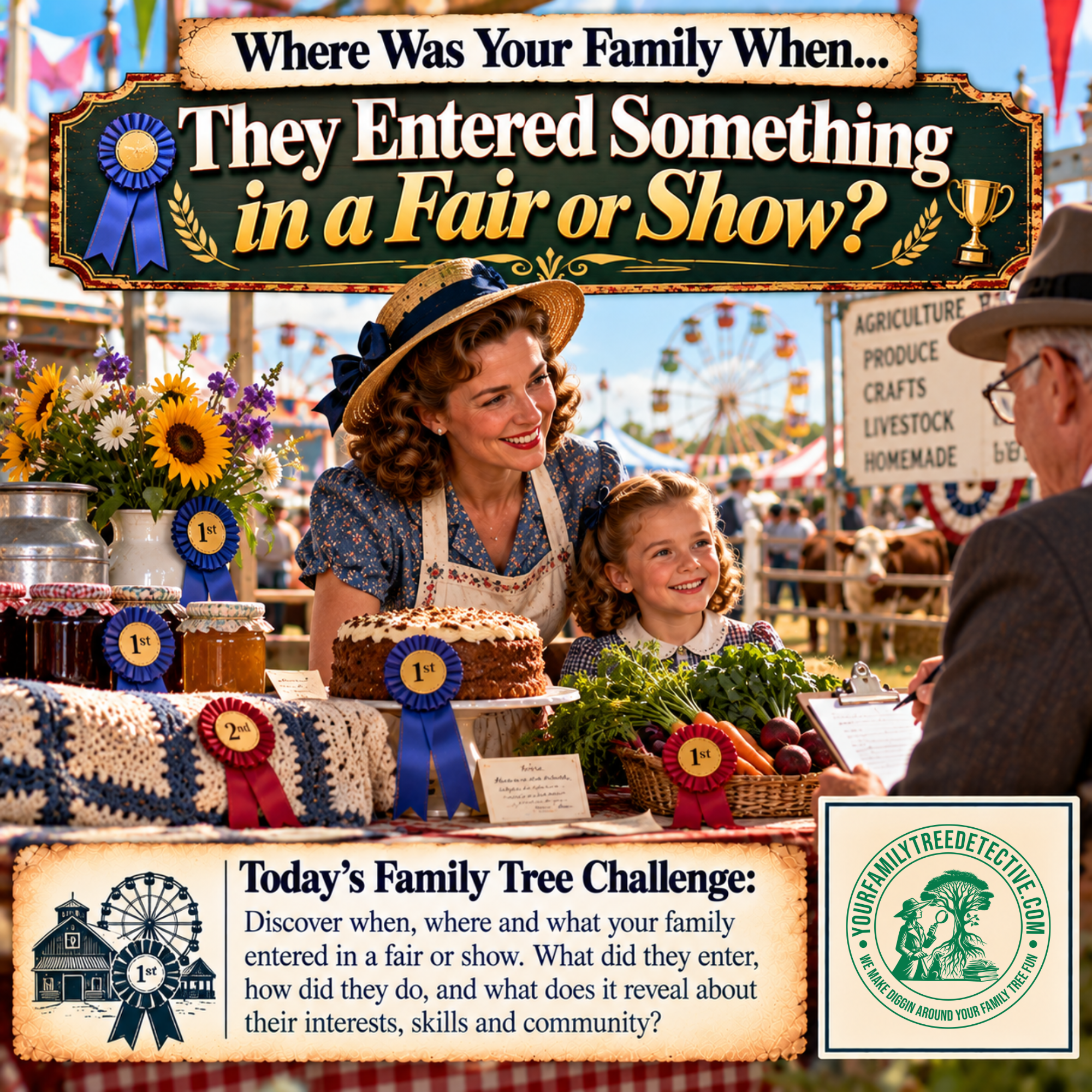
Today's Family Tree Challenge: Find out whether someone in your family ever entered something in a fair or show. What did they enter? Where was the event held? Did they win anything? Search family photographs, newspapers, certificates, ribbons, trophies, programmes, agricultural society records, scrapbooks, and family stories for evidence.
If you find an old ribbon or trophy, don't record only the award. Find out about the person behind it. Who taught them the skill? How long had they been doing it? Was it connected to their occupation, farm, hobby, or household responsibilities? Did they pass that skill on to another generation?
A faded ribbon may not look particularly important sitting in an old box, but once you know the story behind it, it becomes something entirely different. It represents someone's knowledge, effort, pride, competitive spirit, and a day when their community recognised something they did well.
Let us know in the comments below about the stories you uncover.
Podcast Replay: https://youtube.com/live/xPoRlf7Dowk?feature=share
Ready to uncover your own family story?