
Porch Light Letters ·
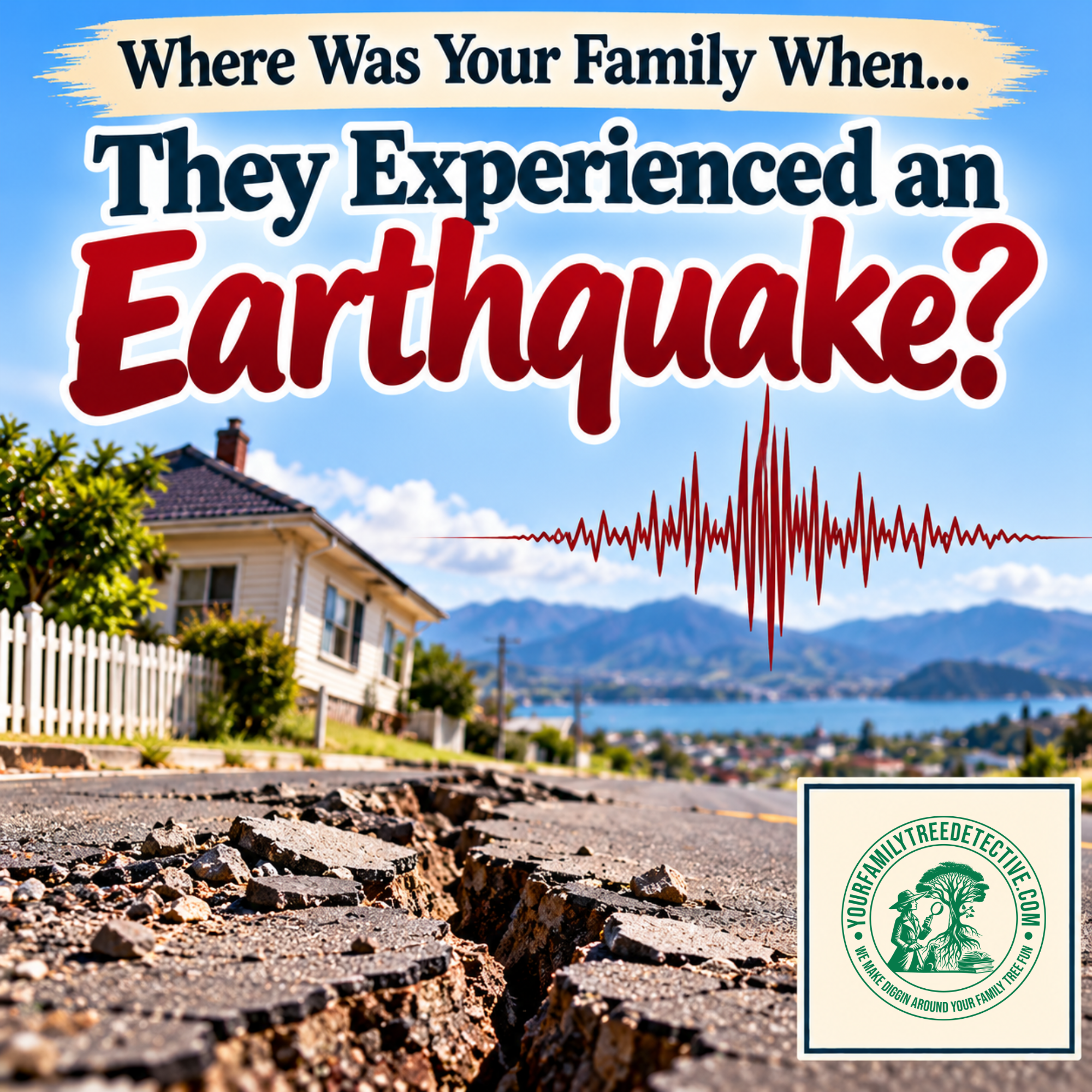
Where Was Your Family When… They Experienced an Earthquake
The ground beneath our feet is something we rarely think about until it suddenly begins to move. One moment, everything is perfectly ordinary. The next, windows are rattling, furniture is shaking, and people are trying to understand what is happening. Whether it lasts only a few seconds or becomes an event that changes an entire community, an earthquake can create memories that remain with a family for generations.
Have you ever experienced an earthquake? Perhaps it was a gentle rolling sensation that made you wonder whether you had imagined it, or a sudden jolt that sent dishes rattling in the cupboards. Maybe it was strong enough to knock things from shelves, damage buildings, interrupt electricity and water supplies, or force families to leave their homes.
Do you know whether your parents, grandparents, or great-grandparents experienced an earthquake? Where were they when it happened? Were they at home, at school, working, travelling, sleeping, or gathered with family and friends? What was the first thing they noticed? Did they recognise it as an earthquake immediately, or did they initially think something else was happening?
For some families, the most memorable part of an earthquake is what happened during those first few moments. Perhaps someone rushed to protect a child, a parent called out to the family, or everyone tried to find a safe place. Others may remember the strange sounds of a building moving, objects falling, animals reacting, or the unsettling feeling of the ground shifting beneath them.
Then there are the moments immediately afterwards. Was everyone safe? Could family members contact one another? Did neighbours come outside to check on each other? Were roads, bridges, railway lines, telephone services, electricity, or water supplies affected? Sometimes the greatest anxiety came not from the shaking itself but from trying to find out whether loved ones were all right.
An earthquake doesn't have to cause widespread destruction to become a memorable family story. A smaller earthquake might be remembered because it interrupted Christmas dinner, woke everyone in the middle of the night, sent a carefully arranged collection crashing from a shelf, or left someone wondering why the bed suddenly seemed to be moving.
For families living in earthquake-prone countries such as New Zealand, Japan, Chile, and parts of the United States, these experiences may appear repeatedly throughout the generations. One ancestor might have experienced a major earthquake while another remembered dozens of smaller tremors during their lifetime.
New Zealand's history contains several significant earthquakes that may connect directly with your family tree. The 1855 Wairarapa earthquake dramatically changed parts of the Wellington region. The 1931 Hawke's Bay earthquake devastated Napier and Hastings and resulted in the deaths of 256 people. The 2010 and 2011 Canterbury earthquakes changed Christchurch and surrounding communities, while the 2016 Kaikōura earthquake caused major damage to roads, railways, buildings, and the landscape.
If your family lived in any of these regions, investigate whether they were there when the earthquakes occurred. Even if they lived some distance away, they may have felt the shaking, helped with recovery efforts, welcomed displaced relatives, or experienced disruptions to travel, employment, and everyday life.
Earthquakes can also reveal extraordinary stories of communities helping one another. Neighbours shared food, water, shelter, and supplies. Families opened their homes to people who had nowhere else to go. Volunteers, emergency workers, medical personnel, and ordinary residents worked together to help their communities recover.
Look for evidence of these experiences in family letters, diaries, photographs, newspaper reports, oral histories, school records, business documents, insurance records, and local archives. An ancestor may have written about the earthquake in a letter to relatives living elsewhere, describing the shaking, damage, aftershocks, and how the family was coping.
Old newspapers can be particularly valuable. They may identify damaged homes and businesses, describe what happened in specific streets, record the experiences of residents, or explain how communities rebuilt afterwards. Even a brief mention of your ancestor's workplace or neighbourhood may help you understand how the earthquake affected their daily life.
Don't overlook photographs taken before and after an earthquake. Buildings that appear in old family pictures may have been damaged, demolished, repaired, or rebuilt. Comparing historical photographs with modern images can reveal changes to the streets, homes, schools, churches, and businesses that were once part of your family's world.
An earthquake may also explain an unexpected event in your family history. Did someone suddenly move to another town? Was a family business forced to close? Did relatives temporarily live together? Was a wedding postponed, a school relocated, or a home rebuilt? Sometimes a major natural disaster provides the missing explanation for changes that appear in official records.
Ask older relatives what they remember about the earthquakes they experienced. What were they doing when the shaking began? How did they react? What happened to their home? Did they experience aftershocks? How long did it take for life to return to normal? Did the experience change how they felt about where they lived?
Pay attention to the small details. Someone may remember a treasured ornament that survived, a family photograph rescued from a damaged house, a pet that behaved strangely before the shaking, or a neighbour who arrived with a hot meal when everything seemed uncertain. Those personal memories can tell us things that official earthquake reports never could.
Today's Family Tree Challenge: Choose an earthquake that occurred in a place where your family lived. Find out when it happened, how strong it was, and which communities were affected. Then investigate whether your parents, grandparents, great-grandparents, or other relatives experienced it. Where were they? What happened to their homes, workplaces, schools, and neighbourhoods? What stories were passed down?
Search historical newspapers, photographs, maps, diaries, letters, local histories, and earthquake records. Compare the date and location of the earthquake with your family timeline. If relatives are still living who remember the event, ask them to describe their experiences and record their stories in their own words.
And don't forget to document your own earthquake experiences. Record the date, location, what you were doing, what you felt, how your family responded, and what happened afterwards. Even an earthquake that caused no damage may become an interesting story for future generations who want to understand what everyday life was like in your time.
Earthquakes can change landscapes, buildings, communities, and sometimes the direction of entire families' lives. But beyond the scientific measurements and historical reports are the personal stories of people who lived through those moments.
A family tree tells us where our ancestors lived. Their earthquake stories can help us understand what happened when the very ground beneath those places began to move.
Let us know in the comments below about the stories you uncover.
Podcast Replay: https://youtube.com/live/d9dLmMfUZBI?feature=share
Ready to uncover your own family story?