Porch Light Letters ·
Where Was Your Family When… They Found a Time Capsule
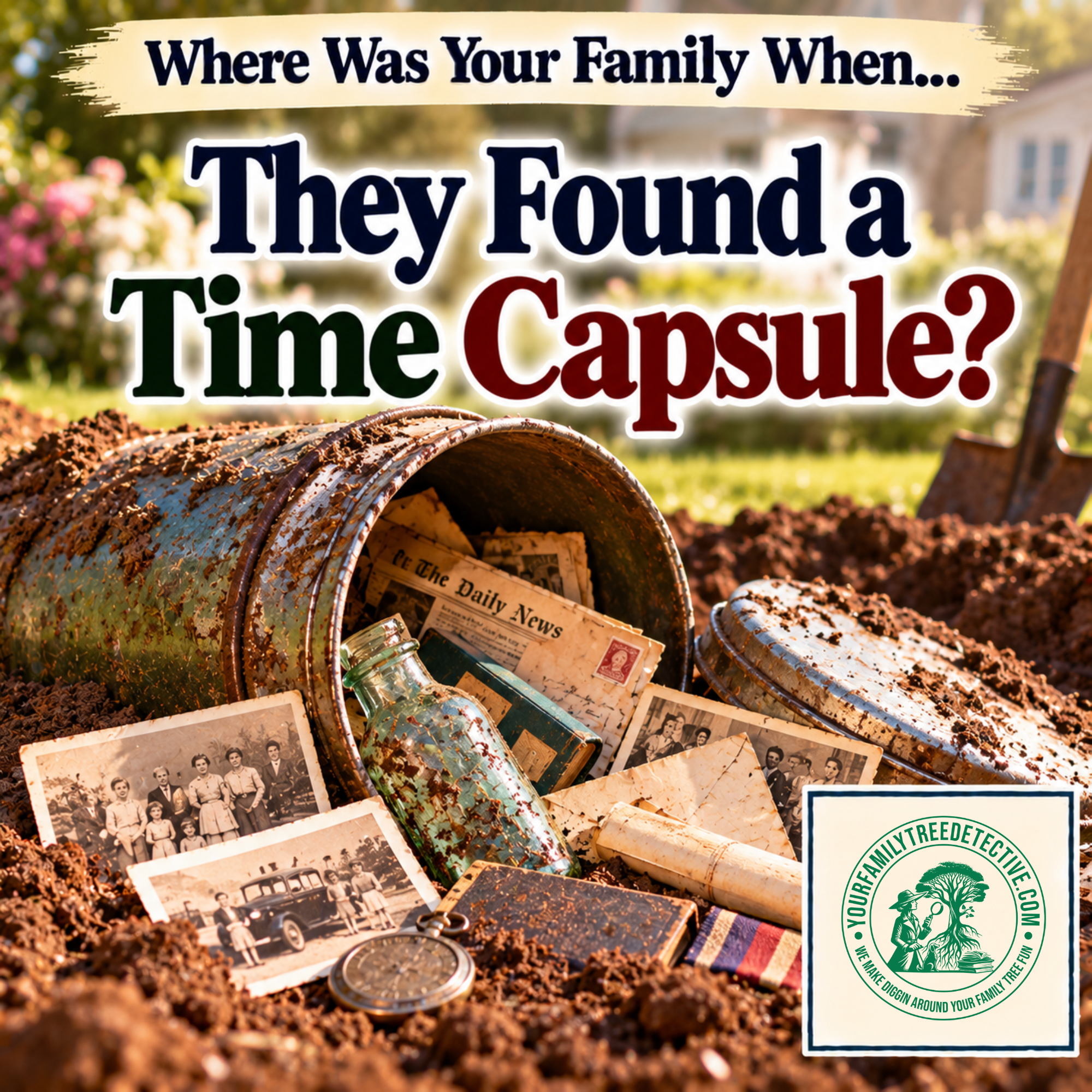
Imagine digging in the garden, renovating an old house, or attending a community celebration when someone discovers a mysterious container that has been hidden for decades. Inside are faded photographs, handwritten letters, old newspapers, coins, and everyday objects that haven't seen daylight in generations. As each item is carefully removed, the people who placed them there begin to reveal glimpses of their lives, their hopes, and the world they knew. Perhaps one of those people was your grandparent, great-grandparent, or another relative whose name appears in your family tree. What if a forgotten time capsule held the missing pieces of a family story that nobody knew existed?
Time capsules have been created for generations as a way of preserving memories and sharing them with people who haven't yet been born. Schools, churches, businesses, community organisations, and families have buried or concealed collections of objects to commemorate important occasions, building projects, anniversaries, and historical milestones. Some were placed beneath foundation stones, inside walls, or under monuments, while others were carefully stored in attics, cupboards, and family homes. The contents often reflected what people considered important at the time, including newspapers, photographs, letters, currency, programmes, and personal messages. For family historians, these collections provide a fascinating opportunity to discover how our ancestors viewed their world and what they wanted future generations to remember.
One of the most interesting aspects of opening a time capsule is discovering the ordinary objects that previous generations considered worth preserving. A newspaper might reveal the major events of the day, while advertisements show the prices of groceries, clothing, household appliances, and other everyday necessities. Photographs could capture local streets, family homes, schools, businesses, and people whose appearances have changed or whose buildings have long since disappeared. Letters written specifically for future generations might describe family traditions, favourite activities, occupations, and predictions about what life would be like many years later. These personal details help us understand that our ancestors weren't simply living through history, but were experiencing their own present and wondering what the future might bring.
Sometimes the discovery of a time capsule creates an unexpected connection between a family and its community. Imagine attending the opening of a capsule buried beneath a school fifty or a hundred years earlier and discovering a photograph featuring your grandmother as a young student. Perhaps your great-grandfather helped construct the building, your great-grandmother contributed a letter, or several relatives participated in the original ceremony. Local newspapers, council records, school archives, and community histories may provide information about when the capsule was created and who was involved. By researching the people, places, and events connected to its contents, you might uncover family relationships and historical details that would otherwise have remained forgotten.
Time capsules also remind us of the importance of preserving our own family stories for future generations. Imagine creating a family time capsule today containing photographs, letters, recipes, family tree information, descriptions of everyday routines, and messages to descendants who may not be born for another fifty years. You could include memories of family celebrations, stories about your home and community, and explanations of objects that might seem ordinary now but become fascinating as the world changes. Carefully choosing suitable archival materials, protecting items from moisture and deterioration, and recording where the collection is stored can help ensure that future generations will actually be able to enjoy its contents. Whether a time capsule is buried beneath the ground or preserved in a family archive, its greatest value lies in the stories and connections it carries from one generation to the next.
Today's Family Tree Challenge: Find out whether your family, school, church, or local community has ever created or discovered a time capsule. Ask relatives if they remember one being buried, opened, or mentioned during a special celebration. Search local newspapers, historical societies, and community archives for photographs or reports about the occasion. Investigate whether any family members were involved and what objects or messages were preserved. Record your discoveries in your family history and consider creating a time capsule of your own for future generations.
Let us know in the comments below about the stories you uncover.
Podcast Replay: https://youtube.com/live/9hwRcWHMvrk?feature=share
Ready to uncover your own family story?