Porch Light Letters ·
Where Was Your Family When… They Got Their First Camera
Today, taking a photograph is almost effortless. We pull out a phone, take as many pictures as we want, delete the ones we don't like, and immediately share the rest. But for earlier generations, owning a camera was something special. That first camera gave an ordinary family the ability to begin recording its own history through the eyes of the people who were actually living it.
Do you know who owned the first camera in your family? Was it your parent, grandparent, great-grandparent, aunt, uncle, or another relative? Perhaps they saved for months to buy it, received it as a birthday or Christmas present, brought it home after military service, or purchased it because a new baby, wedding, holiday, or other important event was approaching.
What kind of camera was it? Maybe it was a simple box camera, a folding camera, an instant camera, a 35mm camera, or something considerably more complicated. If the original camera still exists, find out who owned it and when they bought it. That old camera may be responsible for hundreds of photographs now scattered throughout your family's albums and boxes.
Then ask the question we often overlook: What was the first photograph they took with it? Perhaps someone proudly posed in the garden. Maybe it was the family home, a new car, a beloved pet, a baby, or children playing outside. The first photograph may have seemed completely ordinary at the time, but generations later it could provide a remarkable glimpse into everyday family life.
Photography wasn't inexpensive or unlimited. A roll of film contained only a certain number of exposures, and every photograph cost money to develop and print. That meant people often thought about what was worth photographing. Birthdays, weddings, Christmas gatherings, holidays, graduations, new babies, family reunions, and visits from distant relatives frequently earned one of those precious frames.
Of course, not everything went according to plan. Someone moved. A thumb covered part of the lens. Heads were cut off. Eyes were closed. The photograph was overexposed, underexposed, blurry, or completely mysterious. Don't automatically discard those imperfect photographs. Sometimes the details around the edges are more valuable to a family historian than the intended subject.
Look carefully at what appears in the background. A family photograph might accidentally document the house, wallpaper, furniture, garden, car, toys, clothing, neighbourhood, farm equipment, or buildings that no longer exist. Something nobody intended to photograph may eventually become one of the most valuable clues in the picture.
Then consider the person behind the camera. Every family seems to have had someone who took most of the photographs and consequently appears in very few of them. Can you identify your family's photographer by looking through the albums? Perhaps their spouse, children, and relatives appear repeatedly while they remain almost invisible because they were always the person holding the camera.
Photographs can also reveal who spent time together. Which relatives repeatedly appear in the same pictures? Who came for holidays? Which neighbours or family friends were included so often that they became almost part of the family? Identifying those people may lead you to stories and relationships that were never recorded anywhere else.
Look at the backs of old photographs too. Names, dates, locations, handwritten messages, photographers' stamps, processing information, and even the order in which photographs were printed can provide valuable clues. If your relatives are still able to identify the people in those photographs, add those names now rather than leaving the mystery for another generation.
Don't forget the negatives. Boxes, envelopes, film canisters, and old photographic packets may contain images that were never printed. If you inherit someone's photographic collection, keep the negatives, slides, albums, envelopes, and handwritten notes together whenever possible. The way the original owner organised the collection may itself tell part of the story.
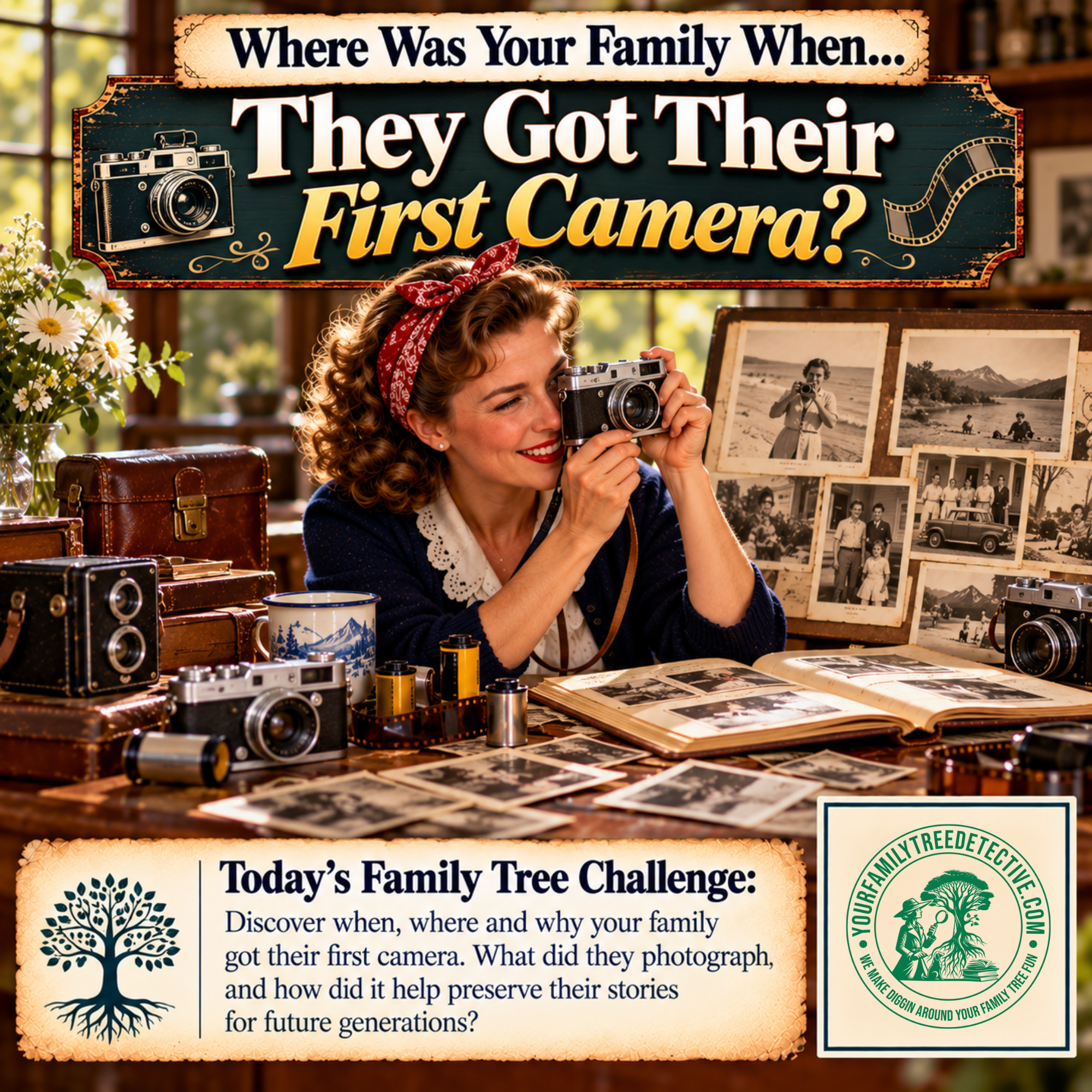
Today's Family Tree Challenge: Find out who owned the first camera in your family. When did they get it? What kind of camera was it? Why did they buy it? What did they photograph? Then look through your oldest family photographs and see whether you can identify which ones may have been taken with that camera. Ask relatives to help identify the people, places, occasions, and stories captured in those images.
If the camera itself still survives, photograph it and record its story. Write down who owned it, approximately when they used it, and which family photographs you believe were taken with it. One day that camera may become just as important to your family's history as the photographs it created.
That first camera did more than take pictures. It gave someone in your family the ability to decide which moments were worth preserving. Decades later, those moments allow us to look through their eyes and see a little piece of the world they knew.
Let us know in the comments below about the stories you uncover.
Podcast Replay: https://youtube.com/live/jbcXuqstqG4?feature=share
Ready to uncover your own family story?