
Porch Light Letters ·
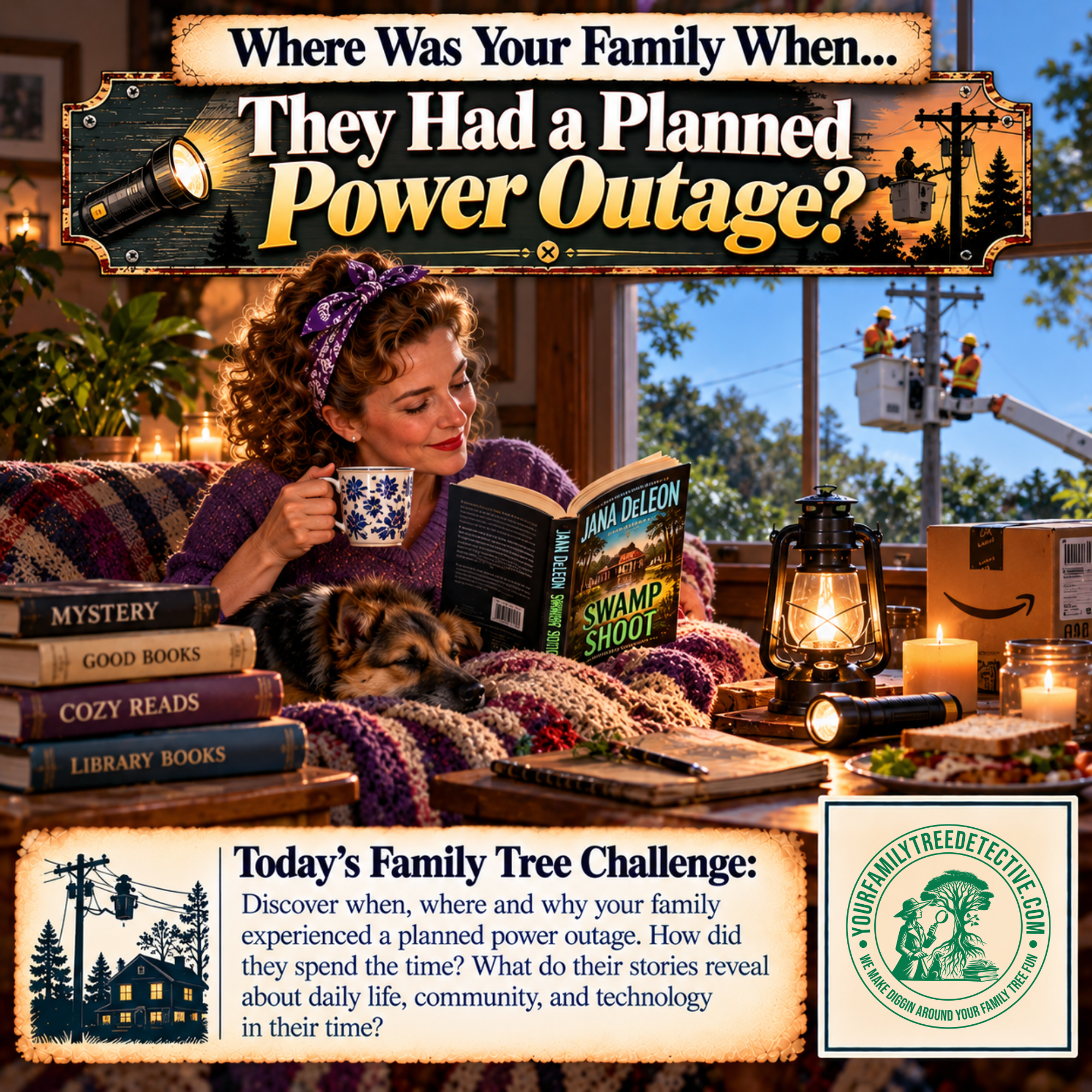
Where Was Your Family When… They Had a Planned Power Outage
Today was a little different around here. We had a planned power outage while the local power company replaced a power pylon. We knew it was coming, so rather than sitting at home waiting for everything to come back on, I caught the bus into town and used the opportunity to run some errands.
By the time I returned home, there was a surprise waiting for me. An Amazon delivery that wasn't supposed to arrive until next week had already appeared. Apparently, even when the electricity isn't working, the book delivery system knows exactly how to find me.
After lunch, I settled in to watch what was happening outside as the crews worked on the underground lines. With no computer, television, or other usual electronic distractions available, it was the perfect excuse to keep reading Jana DeLeon's latest Miss Fortune Mystery, "Swamp Shoot." Once that is finished, I have library books waiting, along with the other books that arrived today.
I also spent some time chatting with a cousin. There is something interesting about having the normal routine interrupted. Suddenly there is time for reading, talking with family, watching what is happening outside, and eventually deciding that a snoozle sounds like an excellent idea.
It made me wonder how our parents, grandparents, and great-grandparents handled planned power outages. Depending on when and where they lived, electricity itself may once have been relatively new to the family. By the time electrical service became an ordinary part of daily life, temporarily losing it could reveal just how quickly families had become dependent upon it.
Do you remember planned outages when you were growing up? Perhaps everyone knew the electricity would be switched off while crews replaced poles, repaired lines, upgraded equipment, or worked somewhere in the neighbourhood. Did your family stay home and continue the day as normally as possible, or did everyone decide it was the perfect excuse to go somewhere else?
Think about what stopped working. There may have been no television, electric stove, washing machine, vacuum cleaner, lights, or hot water. In later generations, computers, internet connections, cordless phones, chargers, and countless other devices joined the list. What someone considered an inconvenience during a power outage can tell us quite a bit about the technology they normally relied upon.
Then think about what didn't require electricity. Families could read, play cards or board games, work in the garden, visit neighbours, write letters, knit, sew, tell stories, take a walk, or simply sit together and talk. Children might suddenly discover that entertainment existed without a screen attached to it.
Food could require some planning too. Was there a gas stove that still worked? Did someone prepare meals beforehand? Was lunch simply sandwiches and something cold? Families with refrigerators and freezers may have been warned to keep the doors closed until the electricity returned. An outage lasting several hours could turn an ordinary meal into something memorable.
A planned outage was very different from an unexpected blackout because there was time to prepare. People could fill containers with water if necessary, finish household chores, charge modern devices, prepare food, organise alternative heating or lighting, and decide how they would spend those electricity-free hours.
The reason for the outage is part of the story as well. Replacing poles and lines, upgrading transformers, expanding electricity into growing communities, and modernising infrastructure all leave clues about how a neighbourhood was changing. Local newspapers, council records, utility notices, photographs, and community histories may help document when those changes occurred.
Ask older relatives what they remember about electricity in their childhood homes. Did they ever experience regular outages? What appliances did the family own at the time? What happened when the power disappeared? Did Mum immediately produce candles? Did Dad find the torch? Did everyone gather in one room? Those ordinary memories help us understand everyday family life in a way official records rarely can.
Today's Family Tree Challenge: Ask someone in your family what they remember about power outages when they were growing up. Were they planned or unexpected? How did the family prepare? What couldn't they do without electricity? What did they do instead? Were there candles, lanterns, battery radios, card games, books, conversations, or perhaps an afternoon snooze involved?
And record your own experiences too. Family history isn't only about events that happened a hundred years ago. Today's ordinary interruption becomes tomorrow's story. Years from now, someone might find it interesting that a planned power outage became a day involving a bus trip into town, errands, an unexpectedly early book delivery, lunch while watching the power crews work, a Miss Fortune mystery, a conversation with a cousin, a stack of new books waiting to be read, and finally a well-earned snoozle.
Let us know in the comments below about the stories you uncover.
Podcast Replay https://youtube.com/live/3lf4DCyw5wQ?feature=share
Ready to uncover your own family story?