Porch Light Letters ·
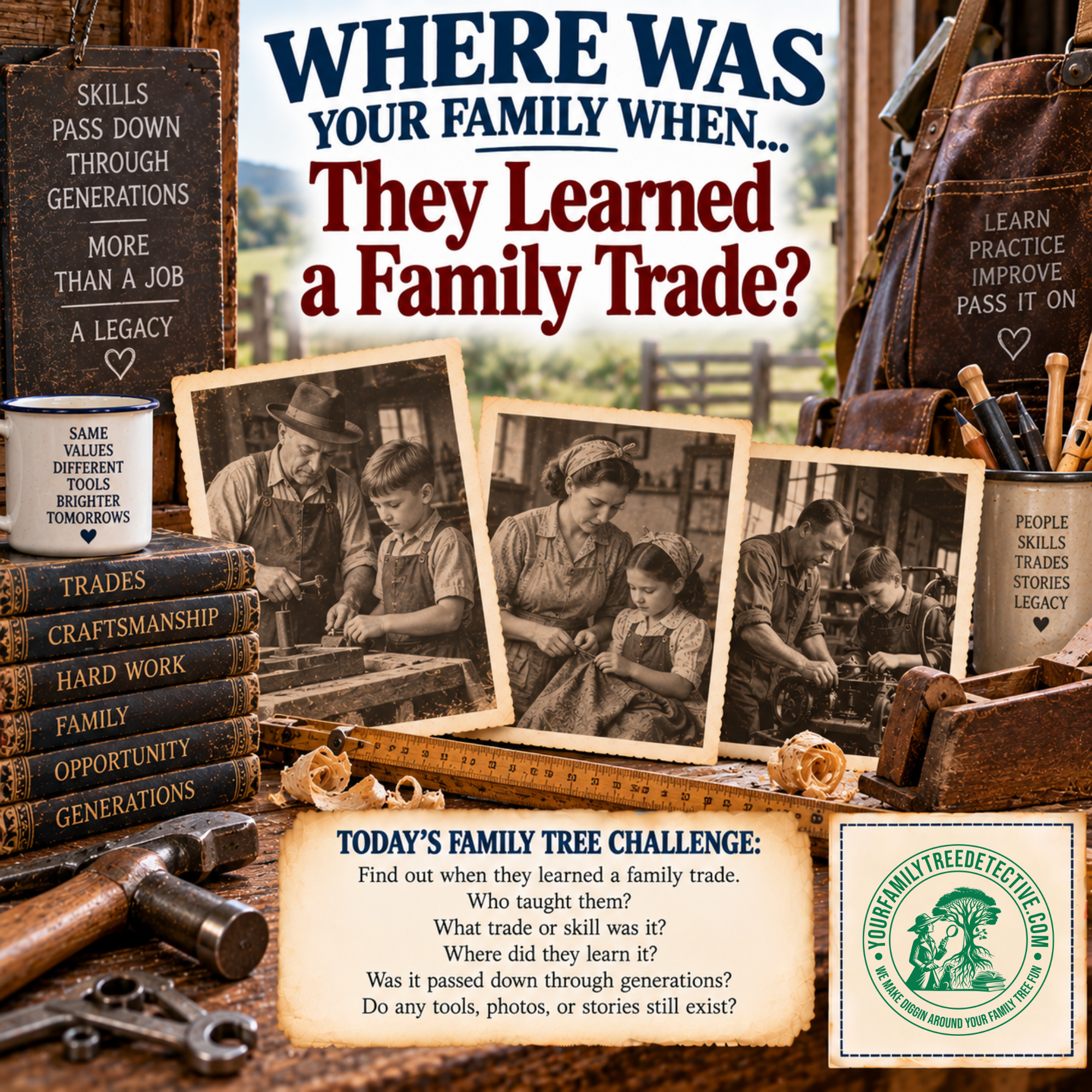
Where Was Your Family When… They Learned a Family Trade
For generations, a trade wasn't simply a way to earn a living. It could become part of a family's identity. Skills were often passed from parent to child, older sibling to younger sibling, or from one generation to the next until an entire family became known for the work they did.
Do you know whether your family had a trade that travelled through the generations? Perhaps they were carpenters, blacksmiths, builders, bakers, butchers, tailors, shoemakers, printers, mechanics, miners, fishermen, farmers, weavers, stonemasons, cabinetmakers, or worked in another skilled occupation.
Learning a family trade often began long before someone officially entered the workforce. Children watched the adults around them, fetched tools, swept floors, carried materials, helped with simple jobs, and gradually learned by doing. By the time they were old enough to work, they may already have spent years absorbing the skills of the trade.
Ask who taught them. Was it their father, mother, grandfather, uncle, aunt, or another relative? Did they learn formally through an apprenticeship, or was their training much less structured? Perhaps the lesson was simply, "Watch what I do, then you have a go."
Some family trades became businesses that lasted for generations. A workshop, farm, shop, factory, or other business might pass from parent to child along with the knowledge needed to keep it running. The family name could become closely connected with a particular product, service, or skill within the local community.
Tools can provide wonderful clues. A carpenter's plane, blacksmith's hammer, dressmaker's scissors, mechanic's spanners, baker's equipment, shoemaker's tools, or another well-used object may have survived in the family. If you have inherited an old tool, find out who owned it, what they used it for, and whether it was passed down from someone before them.
Look at old photographs carefully too. An ancestor standing outside a workshop or posing with tools may be showing you something important about their life. Signs above shops, names painted on vehicles, uniforms, machinery, and equipment in the background can help identify exactly what kind of work they did.
Historical records can take the story even further. Census records, electoral rolls, city directories, apprenticeship records, employment records, newspapers, trade directories, advertisements, licences, and business records may reveal not only someone's occupation but where they worked and how long they remained in the trade.
Sometimes the family trade ended with one generation. A child may have decided they wanted a completely different life. New technology might have made the trade unnecessary, a family business may have closed, or someone might have moved somewhere where their old skills were no longer in demand. Finding out why a trade disappeared from the family can be just as interesting as discovering how it began.
There may also be skills in your family that were never listed as an occupation. Someone might have been known for woodworking, repairing machinery, making clothes, preserving food, working with horses, building stone walls, or creating beautiful handmade objects. They may never have earned their living from the skill, but they still passed their knowledge to the next generation.
Today's Family Tree Challenge: Find someone in your family who learned a trade or practical skill from another family member. Who taught them? How old were they when they started learning? Did they serve an apprenticeship? Did they eventually make a living from it? Was the skill passed to another generation? Look for photographs, tools, advertisements, business records, newspaper articles, or stories that can help you discover more.
Then ask an even more interesting question: does anyone in your family still know how to do it today? A trade may disappear from official records, but sometimes the knowledge survives in the hands of another generation.
When we preserve the story of a family trade, we aren't just recording what our ancestors did for work. We're preserving the knowledge they carried, the skills they practised, the things they created, and the legacy they passed from one pair of hands to another.
Let us know in the comments below about the stories you uncover.
Podcast Replay: https://youtube.com/live/nFpS5dlxs-M?feature=share
Ready to uncover your own family story?