Porch Light Letters ·
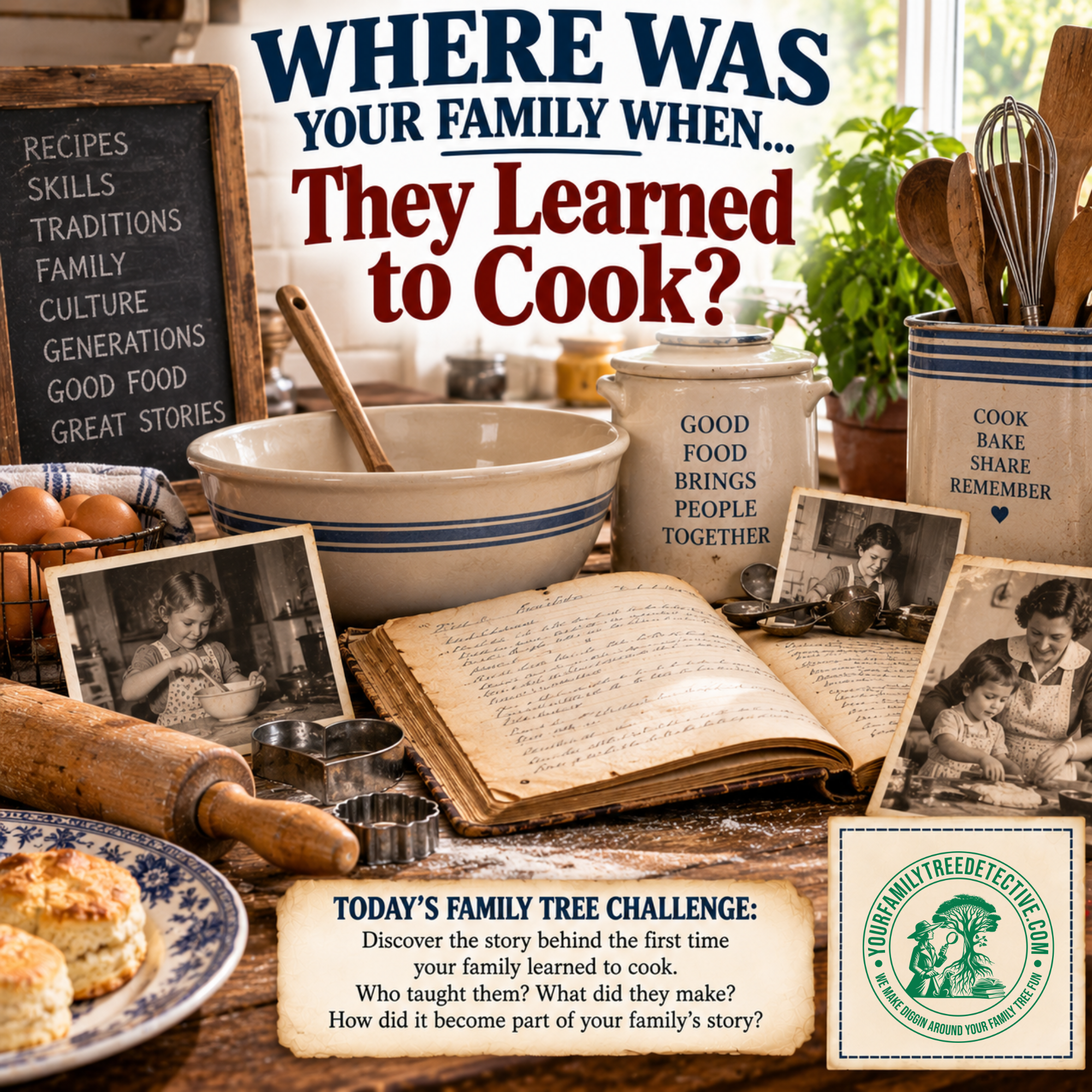
Where Was Your Family When… They Learned to Cook
Learning to cook is one of those everyday experiences that rarely appears in official family records, yet it can tell us so much about how our families lived. Recipes, ingredients, kitchens, cooking methods, and the people who taught us can carry family history from one generation to the next.
Do you know who taught your parents or grandparents to cook? Perhaps they stood on a chair beside their mother or grandmother, watching carefully as ingredients were measured by handfuls rather than cups. Maybe Dad taught them how to cook over a fire, an older sibling showed them the basics, or they learned through cooking lessons at school.
What was the first thing they learned to make? It may have been something simple like bread, biscuits, scones, eggs, soup, a cake, or a family favourite that had already been made for generations. Ask whether they remember their first attempt. Was it delicious, burnt beyond recognition, or quietly fed to the dog when nobody was looking?
The kitchen itself can tell a story. Earlier generations may have cooked over an open fire, on a coal or wood range, or with equipment that would look completely unfamiliar in a modern kitchen. Later came gas and electric stoves, refrigerators, freezers, electric mixers, microwaves, and all the appliances we now take for granted. Ask what their childhood kitchen looked like and what they remember most about it.
Cooking was often learned because it had to be. Children might have been expected to help prepare meals for a large family. Someone working on a farm may have cooked for farm workers. During wartime or difficult economic times, families learned how to stretch ingredients, substitute what wasn't available, and make sure nothing went to waste.
Family recipes can also reveal where we came from. When people moved to another country, food traditions often travelled with them. They brought recipes, cooking techniques, spices, celebrations, and favourite dishes from home. Over time, those recipes might have changed as different ingredients became available, but a piece of the family's original culture remained on the dinner table.
Then there are those recipes that aren't really recipes at all. A pinch of this. A handful of that. Add enough flour until it feels right. Cook it until it looks done. Grandma never measured anything because she had made the same dish hundreds of times. Unfortunately, that can make recreating it rather interesting when nobody wrote down exactly what she did.
Think about the dishes that became part of your family's traditions. What was always served at birthdays, Christmas, Sunday dinner, family reunions, or other celebrations? Was there one person everyone relied upon to bring a particular dish because nobody else could make it quite the same way?
Look for handwritten recipe books, recipe cards, old cookbooks with notes in the margins, photographs taken in kitchens, aprons, cooking utensils, serving dishes, and other items that may have been passed down. A stained recipe card written in your grandmother's handwriting can become every bit as precious as an official family document.
Today's Family Tree Challenge: Find one recipe connected to someone in your family. Discover who first made it, who taught them, where the recipe came from, and when your family traditionally served it. If the recipe has never been written down, record it now. Better still, make the dish together with the person who knows how and capture the stories that come out while you're cooking.
Don't just preserve the ingredients and instructions. Write down whose recipe it was, why it mattered, who loved eating it, when it appeared on the family table, and any stories connected with it. Someday those details may be more valuable to your descendants than the recipe itself.
Food feeds us for a day, but the recipes, traditions, and memories created around the family table can connect generations long after the meal is over.
Let us know in the comments below about the stories you uncover.
Podcast replay:
Ready to uncover your own family story?