Porch Light Letters ·
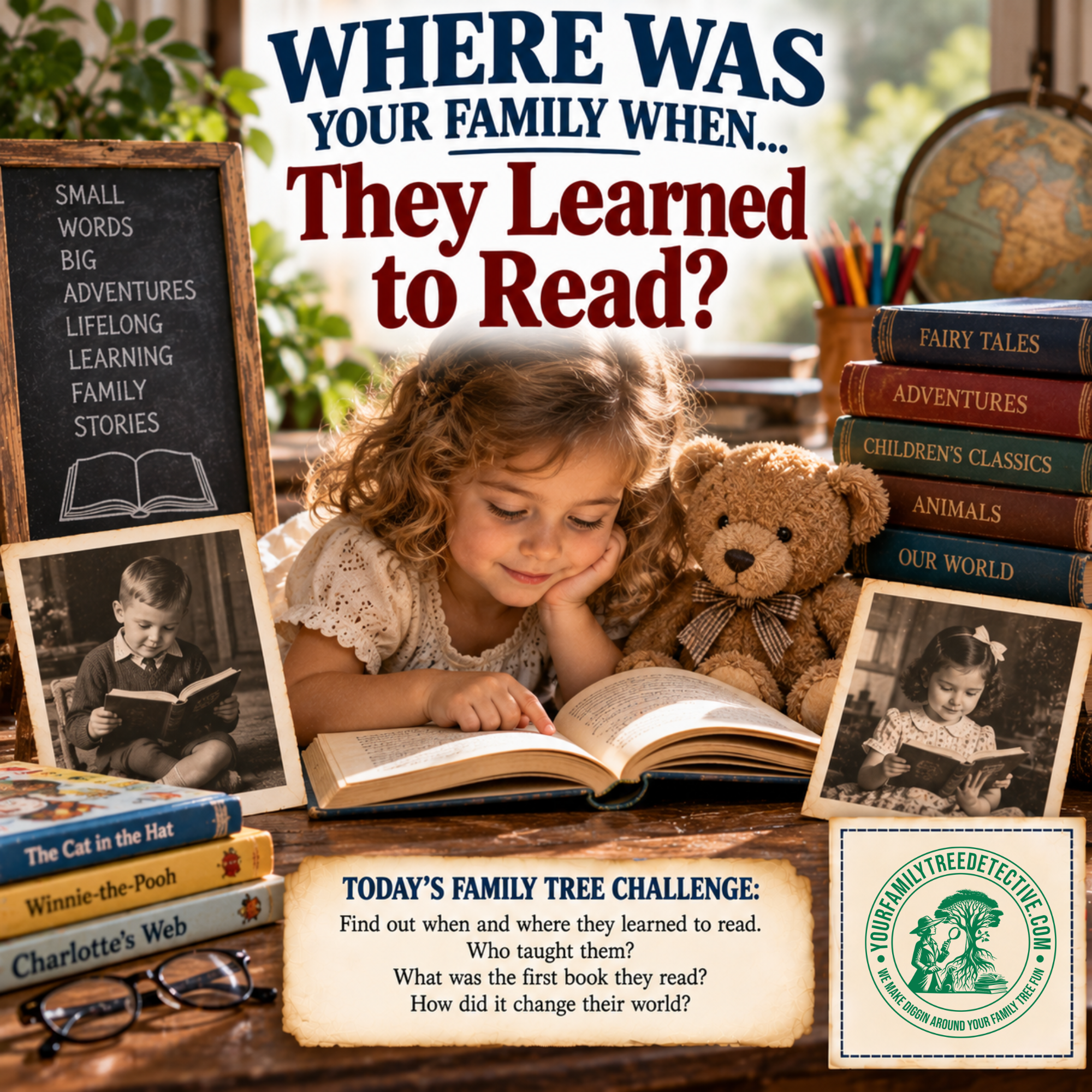
Where Was Your Family When… They Learned to Read
Learning to read is one of those childhood milestones that can easily disappear from our family stories. We record when someone was born, where they lived, when they married, and what they did for a living, but rarely do we ask about the moment when letters became words and words suddenly opened an entirely new world.
Do you know who taught your parents, grandparents, or great-grandparents to read? Perhaps it was their mother sitting beside them with a favourite storybook, a father reading the newspaper aloud, an older sibling helping with schoolwork, or a much-loved teacher who patiently helped them sound out their first words.
Where did they learn? Some children attended one-room country schools where several ages were taught together. Others learned in busy city classrooms. They may have started with alphabet cards, primers, school readers, chalkboards, or simple books specifically designed to teach children to read.
What was the first book they remember reading for themselves? It might have been a school reader, fairy tale, adventure story, Bible story, comic book, newspaper, or a treasured book that had already passed through several children in the family. Some people can still remember the title, illustrations, and even where they were sitting when they first realised they could read it without anyone's help.
Books weren't always as readily available as they are today. Some families had shelves filled with them, while others owned only a handful. A book might have been received as a birthday or Christmas present, borrowed from school, passed between neighbours, or checked out from a local library. When books were scarce, the same favourites could be read again and again until the stories were almost known by heart.
Reading at home created its own family traditions. Stories might have been read aloud at bedtime, around the fire, or gathered together in the evening. Older children sometimes read to younger siblings. Newspapers were passed around the household, and letters from relatives living far away might be read aloud so everyone could hear the news.
For some of our ancestors, learning to read wasn't easy or guaranteed. Children may have left school at a young age because they were needed on the farm, in a factory, in the family business, or at home. Others may have learned to read later in life through evening classes, military service, church groups, or with the help of another family member.
Language can add another fascinating layer to the story. An ancestor who moved to another country may have learned to read in one language and then had to learn another. Their children may have grown up reading the language of their new country while their parents continued reading newspapers, letters, and books from their homeland.
Look through your family treasures for evidence of those early reading years. Old schoolbooks, report cards, school certificates, library cards, handwriting books, letters, inscriptions inside books, and childhood photographs can all provide clues. A battered old book with your grandmother's name written inside the cover may tell you much more than simply what she liked to read.
And don't forget to ask about the books themselves. What was their favourite childhood story? Was there a character they loved? Did they have a book they read until the cover fell off? Was there a particular story their mother or father always read to them? Did their love of reading continue into adulthood?
Today's Family Tree Challenge: Ask someone in your family about learning to read. Who taught them? Where did they learn? How old were they? What was the first book they remember reading by themselves? Who read stories to them before they could read? What books did they love as children? If any of those childhood books still survive, photograph them and record the stories connected to them.
We preserve family photographs, certificates, letters, and heirlooms because they help tell us who our ancestors were. Sometimes an old childhood book deserves a place among those treasures too. The stories our families learned to read may have helped shape the people they eventually became.
Let us know in the comments below about the stories you uncover.
Podcast Replay: https://youtube.com/live/S7LlYWlqtc0?feature=share
Ready to uncover your own family story?