
Porch Light Letters ·
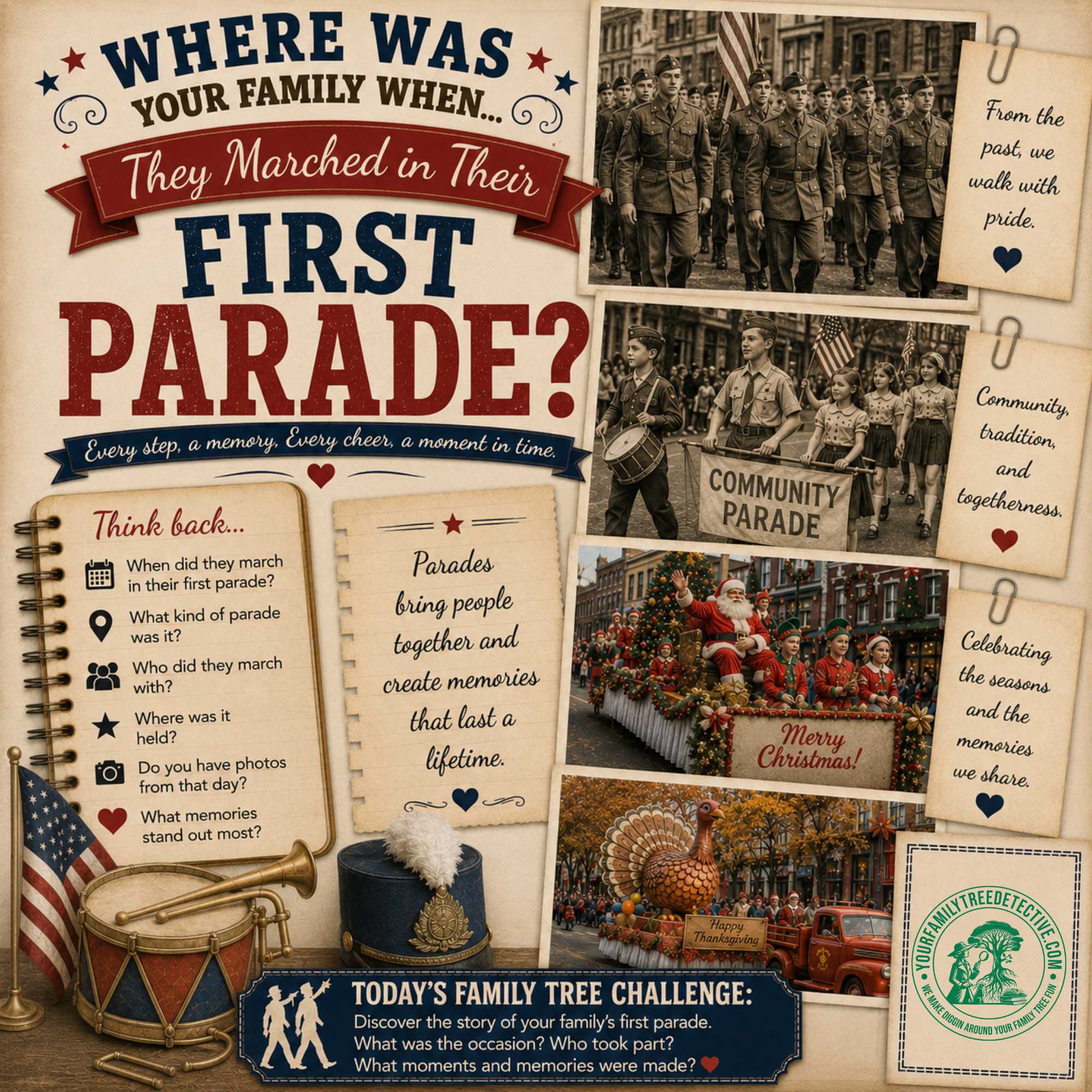
Where Was Your Family When… They Marched in Their First Parade
Parades have been bringing communities together for generations. Some celebrate holidays and special occasions, others honour military service, mark important anniversaries, or simply give a town or community a reason to gather together.
Do you know the first time someone in your family actually marched in a parade rather than watching from the sidelines? Perhaps a grandparent marched in uniform, a parent played in a school band, or a child proudly walked with their Scout or Guide group. They may have represented a community organisation, business, school, club, cultural group, or another organisation that was important to them.
The parade itself could have been almost anything. Military parades, Christmas parades, Thanksgiving parades, Anzac Day commemorations, local anniversary celebrations, homecoming parades, school events, agricultural shows, and community festivals have all given generations of families an opportunity to march through their towns.
Think about everything that happened before the parade began. Uniforms had to be prepared, instruments tuned, banners made, costumes organised, and floats decorated. Someone may have spent weeks practising how to march or rehearsing music. Children probably counted down the days while parents worked behind the scenes making sure everything was ready.
Then came parade day. Streets filled with spectators, bands began playing, flags and banners appeared, and families searched the crowd hoping to spot someone they knew. For the person marching, there may have been excitement, nerves, pride, or the enormous responsibility of remembering to stay in step.
Who was standing along the parade route watching them? Parents, grandparents, spouses, siblings, children, neighbours, and friends may have been waiting with cameras ready. Sometimes the story of the person watching is just as interesting as the story of the person marching.
Photographs can provide wonderful clues. Look beyond the person you recognise. What does their uniform tell you? Can you identify the organisation they were representing? Are there signs, buildings, businesses, banners, vehicles, or landmarks in the background that could help identify where and when the photograph was taken?
You might also find parade programmes, newspaper articles, ribbons, badges, uniforms, photographs, letters, or other keepsakes. Local newspapers are especially worth checking because community parades were often photographed and reported in detail, sometimes including the names of participants.
Today's Family Tree Challenge: Find out about a parade someone in your family marched in. What kind of parade was it? Where and when was it held? Why were they participating? What organisation did they represent? Who went to watch them? Look for photographs, newspaper articles, programmes, uniforms, badges, ribbons, or other clues. Then ask your family what they remember about that day.
A parade may have lasted only an hour or two, but the story of proudly marching down that street can become a family memory that lasts for generations.
Let us know in the comments below about the stories you uncover.
Podcast Replay:
Ready to uncover your own family story?