Porch Light Letters ·
Where Was Your Family When… They Opened an Old Family Trunk
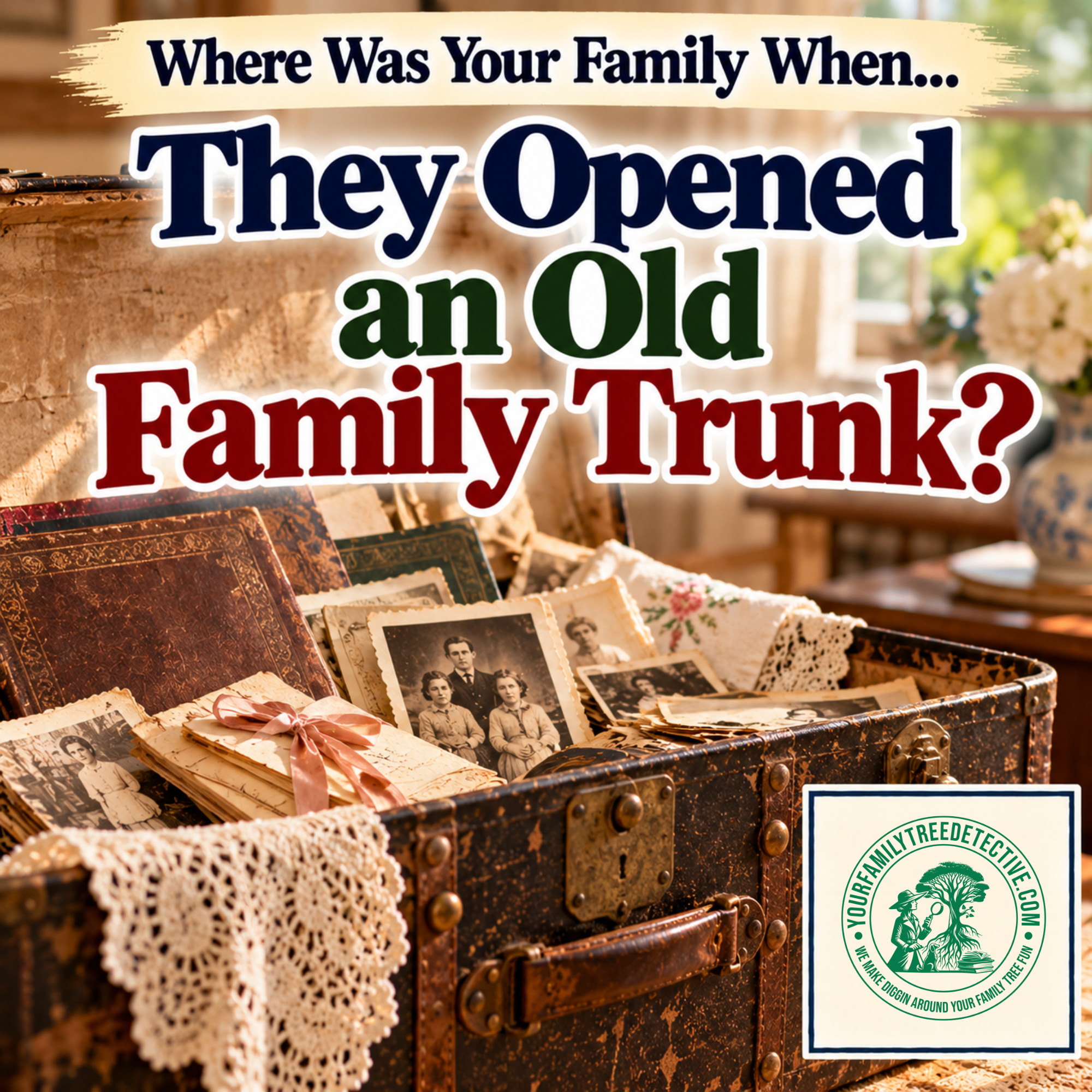
Imagine discovering an old, dusty trunk tucked away in the attic, hidden beneath a bed, or forgotten in the corner of a storage room. The hinges creak as you slowly lift the lid, revealing treasures that haven't seen daylight in decades. Inside are faded photographs, handwritten letters, delicate lace, old documents, and mysterious keepsakes. Each item holds a story, but who did they belong to, and why were they important enough to preserve? What if opening that trunk was like opening a doorway into your family's past, revealing memories and secrets that had been waiting generations to be rediscovered?
For generations, families used trunks to store their most treasured possessions. Before modern storage solutions, sturdy wooden trunks and travelling chests protected clothing, important documents, photographs, and personal belongings. Some accompanied families as they travelled across oceans to begin new lives in distant countries. Others remained in family homes, gradually becoming repositories of memories passed down from one generation to the next. Imagine your ancestors carefully packing everything they considered precious before leaving their homeland, knowing they might never return. What would they have chosen to take, and what would those possessions tell you about their lives?
One of the most fascinating discoveries inside an old family trunk is often the collection of photographs and letters. A photograph showing unfamiliar faces might be the only surviving image of a great-grandparent or a distant relative. Handwritten correspondence could reveal relationships, family celebrations, everyday struggles, and the emotions of people whose lives are otherwise represented by names and dates. Perhaps there's a bundle of love letters tied with ribbon, postcards sent from overseas, or a letter announcing the birth of a child. These personal treasures allow us to hear our ancestors' voices through their own words and experience moments of their lives that official records rarely capture.
Family trunks can also contain unexpected clues that help solve genealogy mysteries. Birth certificates, marriage documents, military records, immigration papers, old passports, newspaper clippings, and family Bibles might reveal information that has been missing from your research for years. Sometimes the smallest object provides the biggest breakthrough. A name written inside a book, an address on an envelope, or a date scribbled on the back of a photograph could connect two branches of a family tree. Even seemingly ordinary possessions, such as jewellery, sewing patterns, recipes, medals, or children's toys, can reveal occupations, traditions, interests, and the circumstances in which our ancestors lived. The challenge is recognising that every object may have a story worth investigating.
Opening an old family trunk can be an emotional experience, particularly when its contents belonged to someone we loved or an ancestor we never had the opportunity to meet. These objects remind us that our ancestors were real people with hopes, dreams, friendships, challenges, and cherished memories. Unfortunately, many family treasures lose their stories when nobody records who owned them or why they mattered. That's why it's so important to photograph and document discoveries, identify the people connected to each item, and ask older relatives what they remember. Handle fragile materials carefully, preserve original documents in suitable archival storage, and record the stories while someone can still tell them. By doing so, you're protecting more than a collection of possessions. You're preserving pieces of your family's history for generations yet to come.
Today's Family Tree Challenge: Find an old family trunk, keepsake box, or collection of family treasures that hasn't been explored in years. Choose one item and investigate who owned it, where it came from, and why it was preserved. Ask relatives whether they recognise it or remember the story behind it. Photograph your discovery, record what you learn, and add its story to your family history for future generations to enjoy.
Let us know in the comments below about the stories you uncover.
Podcast Replay: https://youtube.com/live/ItMCeFNbNCg?feature=share
Ready to uncover your own family story?