Porch Light Letters ·
Where Was Your Family When… They Travelled by Train for the First Time
There was a time when travelling any great distance meant walking, riding a horse, travelling by carriage, or spending days aboard a ship. Then the railway arrived, connecting towns, cities, workplaces, ports, and families in ways previous generations could barely have imagined.
Do you know when someone in your family travelled by train for the first time? For us today, catching a train may seem ordinary, but imagine experiencing it when trains were still something new. The enormous locomotive, clouds of steam, shrill whistle, crowded platform, uniformed railway workers, and the sensation of moving faster across the countryside than you had ever travelled before must have been unforgettable.
Their first journey may have happened when they were children. Perhaps the family travelled to visit grandparents or other relatives, took a holiday, went into the city for a special occasion, or simply decided to experience this remarkable new form of transportation. Ask older relatives whether they remember their first train journey and what made it memorable.
For others, the railway wasn't about adventure. It was transportation that changed their everyday lives. Trains carried people to school, work, markets, factories, military camps, hospitals, and neighbouring communities. A journey that once required hours or even days could suddenly become part of an ordinary routine.
Railways also played an important role in migration. After arriving in a new country by ship, your ancestors may have continued their journey inland by train. Imagine stepping off a ship after weeks at sea, collecting your belongings, and then boarding a train that would carry you towards the place you were going to call home.
Sometimes the train journey represented a major turning point. Someone might have boarded a train to leave home for the first time, begin a new job, attend university, join the military, get married, or move permanently to another town. The railway station may have been the place where families hugged goodbye without knowing when they would see one another again.
Then there were the journeys home. Soldiers returned from war by train. Children came home from boarding school. Family members travelled across the country for weddings, funerals, births, and reunions. Railway platforms witnessed countless emotional hellos and goodbyes that rarely made it into official records.
Look carefully at your family photographs. Is there a railway station in the background? Are your relatives standing beside a locomotive or railway carriage? Do you have photographs of someone holding luggage on a platform? Station signs, uniforms, luggage labels, and even advertisements can help identify when and where a photograph was taken.
Old railway tickets, timetables, postcards, luggage tags, diaries, letters, and newspaper articles can add even more detail. If you know the date and destination of a journey, you may be able to discover which railway line they travelled, where they changed trains, how long the journey took, and what the ticket would have cost.
Don't forget ancestors who worked on the railway. Your family tree might include an engine driver, fireman, guard, porter, stationmaster, ticket clerk, signalman, engineer, track worker, or someone employed in the railway workshops. For those families, trains weren't simply transportation. The railway could provide employment, housing, community, and a way of life that continued through several generations.
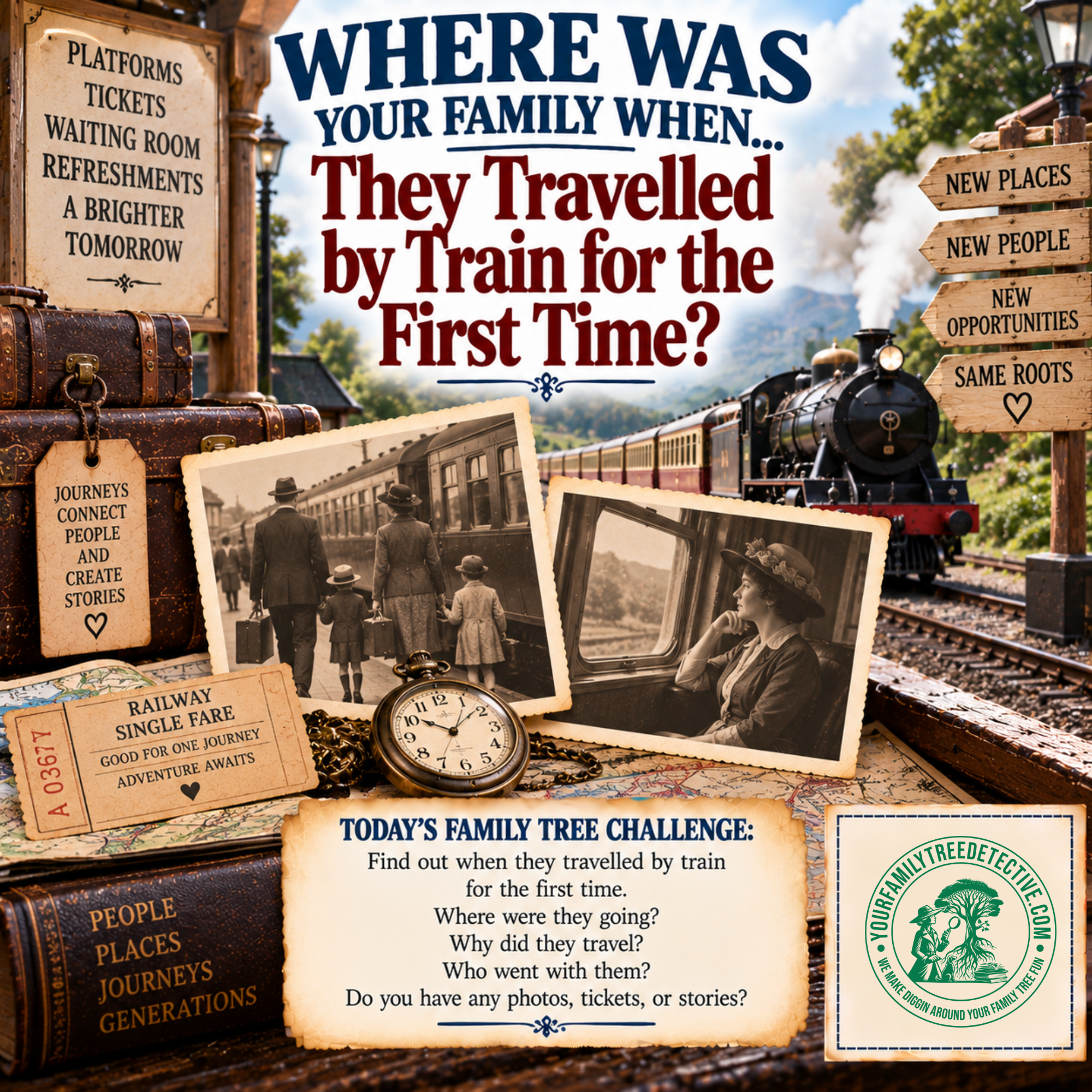
Today's Family Tree Challenge: Find out when someone in your family travelled by train for the first time. Where were they going? Why were they travelling? Who went with them? What railway line might they have used? Look for photographs, tickets, timetables, postcards, letters, diaries, newspaper articles, and family stories that could help you reconstruct their journey.
Then take the story one step further. Find the railway station they departed from and the station where they arrived. Are the buildings still standing today? Does the railway line still exist? You may be able to trace the same route your ancestor travelled generations ago.
A train journey can look like nothing more than a line connecting two places on a map. But for our ancestors, that journey might have meant opportunity, adventure, separation, reunion, or the beginning of an entirely new chapter in their lives.
Let us know in the comments below about the stories you uncover.
Podcast Replay: https://youtube.com/live/oX6EZib4wTA?feature=share
Ready to uncover your own family story?