
Porch Light Letters ·
Where Was Your Family When… Women Won the Right to Vote
The right of women to vote arrived at different times around the world, which means this question can lead us into very different chapters of our family history. Where were the women in your family when they were first legally able to walk into a polling place and cast their vote?
Here in New Zealand, that story has a particularly important place in our history. On 19 September 1893, Governor Lord Glasgow signed the Electoral Act into law, making New Zealand the first self-governing country in the world in which women had the right to vote in parliamentary elections. Just over two months later, on 28 November 1893, New Zealand women went to the polls in a general election for the first time.
That achievement didn't happen overnight. Women and their supporters had campaigned for years. Petitions were presented to Parliament in 1891, 1892 and 1893. The enormous 1893 petition campaign ultimately gathered nearly 32,000 signatures across the petitions presented that year, representing almost a quarter of New Zealand's adult European female population.
Could one of the women in your family have signed one of those petitions? If you had female ancestors living in New Zealand in 1893, this is a wonderful question to investigate. Search for your great-grandmothers, great-great-grandmothers, aunts, sisters and other women in your family who were old enough to have participated.
Then find out where the women in your family were living when they gained the vote. If they lived in another country, the date may be completely different. For example, the United States ratified the 19th Amendment on 18 August 1920 and certified it on 26 August, prohibiting denial of the vote on account of sex. However, discriminatory laws and practices continued to prevent many women, particularly African American women and other minority women, from exercising that right for decades afterward.
Think about the generations involved. A woman born when she had no parliamentary vote could live long enough to watch her daughter and granddaughter grow up taking voting for granted. That change happened within individual families, not just in history books.
Can you discover when a woman in your family voted for the first time? She may have mentioned it in a diary or letter. Newspapers sometimes reported on women voting in their communities. Electoral rolls can help establish where she was living and whether she was registered to vote.
There is another fascinating question to ask older relatives: what did the family think about women having the vote? We shouldn't assume everyone held the same opinion. Families could have contained enthusiastic supporters, determined opponents, and plenty of people somewhere in between. Capturing those differing attitudes can help us understand the world our ancestors actually lived in.
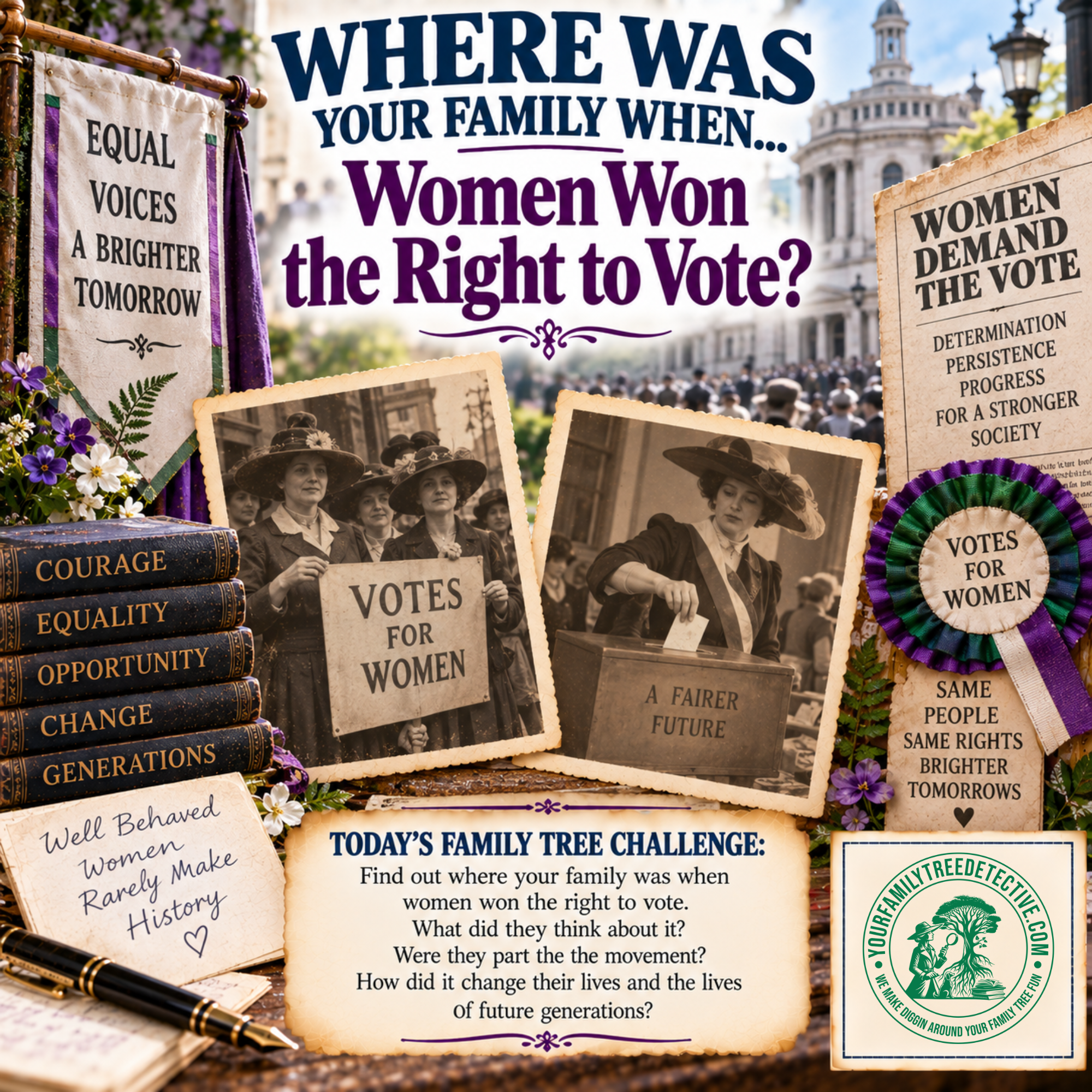
Today's Family Tree Challenge: Choose one woman in your family tree and find out when women gained the right to vote where she lived. How old was she? Was she eligible to vote immediately? Can you find her on an electoral roll? If she lived in New Zealand in 1893, check whether she or another woman in the family signed a suffrage petition. Then see whether you can discover anything about the first election in which she could participate.
Dates and legislation tell us when history changed. Family history allows us to ask something more personal: what did that change mean for the people whose lives eventually became part of ours?
Let us know in the comments below about the stories you uncover.
Podcast Replay: https://youtube.com/live/6tPAx3Dg9mw?feature=share
Ready to uncover your own family story?