Porch Light Letters ·
Why Can't I Find My Ancestor in Census or Historical Records
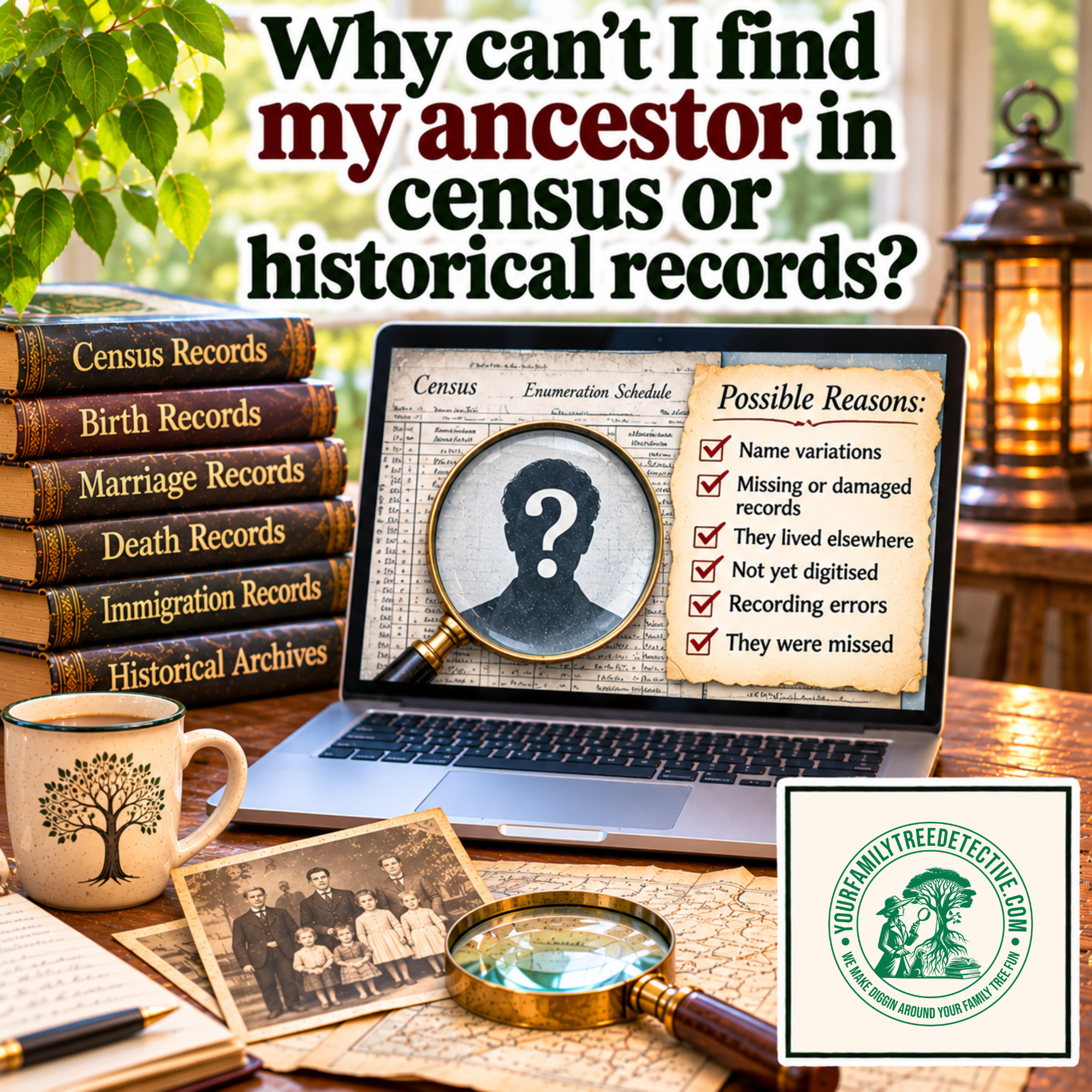
Have you ever spent hours searching for an ancestor in census records, birth registrations, or historical documents, only to discover that they seem to have vanished into thin air? You know they existed, you've found evidence of their life in other records, and perhaps you've even located them in an earlier census, but suddenly there's no trace of them anywhere. It's enough to make you wonder whether your ancestor was deliberately hiding, had a secret identity, or simply didn't want future generations discovering what they were up to. So, why do some ancestors seem to disappear from historical records, and what can you do to track down those elusive family members?
One of the most common reasons ancestors are difficult to find is that their names were recorded differently from the way we know them today. Census enumerators, clerks, and other officials sometimes misunderstood names, made spelling mistakes, or recorded information based on how a name sounded, particularly when dealing with unfamiliar accents or languages. Your ancestor might appear under a nickname, middle name, maiden name, married surname, or an entirely unexpected spelling, while errors introduced during the transcription of historical documents can make them even harder to locate in online searches. Try searching with alternative spellings, initials, wildcard characters, and combinations of family members' names, and remember that sometimes removing a surname or searching by birthplace and approximate age can reveal a record you've previously overlooked.
Another possibility is that the records you're searching for simply no longer exist, were never created, or haven't been made available online. Fires, floods, wars, poor storage conditions, and administrative decisions have resulted in the loss or destruction of countless historical documents, including significant portions of some census collections. In other cases, records may survive in archives, libraries, churches, government offices, or private collections but remain unindexed or undigitised, meaning they won't appear in an ordinary online name search. Before assuming your ancestor is missing, investigate whether the relevant records were created for that location and time period, whether they still survive, and where the original documents or surviving copies might be held.
Your ancestor may also have moved somewhere unexpected, making them difficult to locate if you're searching only in the places where you believe they lived. Families frequently relocated for employment, marriage, military service, land opportunities, or personal circumstances, sometimes moving between towns, counties, or countries without leaving an obvious trail. Census records can also contain incorrect ages, birthplaces, occupations, or family relationships, and some individuals were accidentally omitted, recorded in another household, or counted somewhere other than their usual residence. When a direct search produces no results, investigate spouses, children, siblings, neighbours, and other relatives, because following the movements of people connected to your ancestor can help you discover where they went.
So, what should you do when you've tried everything and your ancestor still refuses to make an appearance in the historical records? Begin by reviewing the evidence you already have, creating a timeline of confirmed events, and identifying the specific years or locations where information is missing. Expand your search beyond census returns to include newspapers, electoral rolls, land records, probate files, cemetery registers, military documents, church records, and local directories, because these sources may reveal information that traditional genealogy searches overlook. Most importantly, keep detailed research notes, question assumptions, compare evidence carefully, and remember that an ancestor who appears to be missing may simply be waiting to be discovered through a different name, location, or historical source.
Today's Family Tree Challenge: Choose one ancestor you've struggled to locate in a census or historical record and write down the information you know about their life, including confirmed dates, locations, and family relationships. Review your previous searches and try at least two alternative approaches, such as using a different name spelling, removing search restrictions, or searching for another member of their household. Investigate whether the records you're looking for actually survive and whether they might be available through a different website, archive, or local historical collection. Record what you discover, identify any new clues, and decide which research strategy you'll try next to bring your missing ancestor back into the family story.
Let us know in the comments below about the stories you uncover.
Podcast Replay: https://youtube.com/live/q3kBB-R6XmM?feature=share
Ready to uncover your own family story?