
Porch Light Letters ·
Why Did My Ancestors Leave Their Homeland
Have you ever wondered what would make someone leave behind their home, family, friends, and everything familiar to begin a completely new life in another country? Imagine standing on a crowded deck with a suitcase containing your most treasured possessions, watching the shoreline disappear as you sail towards an uncertain future. Perhaps your ancestors were searching for better opportunities, escaping difficult circumstances, or following loved ones who had already made the journey, but what convinced them to take that enormous step? So, how can we discover why our ancestors left their homeland, and what might their decisions reveal about the hopes, challenges, and dreams that shaped our family history?
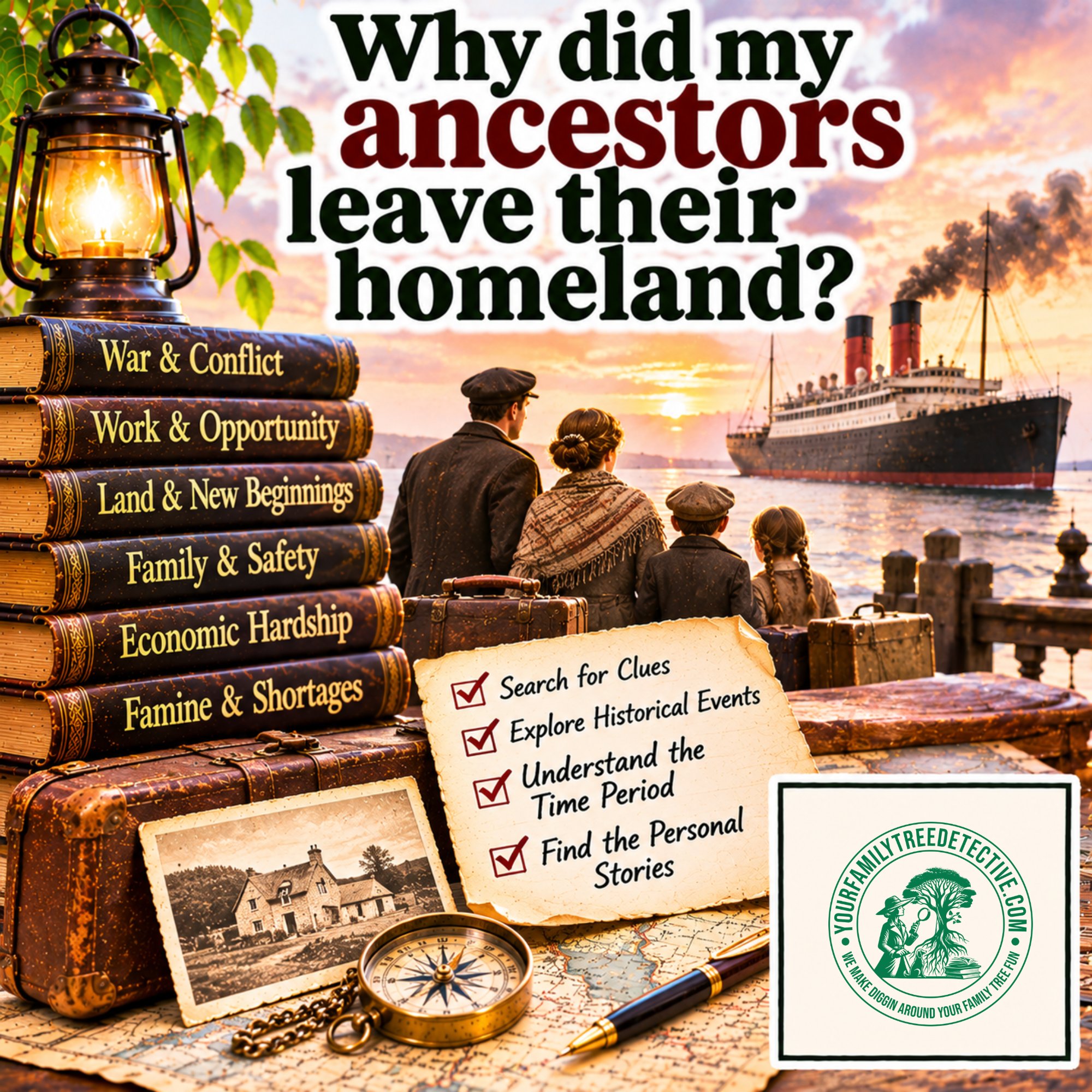
Throughout history, people have migrated for many different reasons, often influenced by a combination of circumstances rather than one single event. Some ancestors left because of poverty, unemployment, famine, land shortages, or limited opportunities, while others were escaping war, persecution, political instability, or restrictions on their freedom. Many were attracted by the possibility of owning land, finding employment, joining family members, receiving an education, or creating a more secure future for their children. It's important to remember that not every migration was voluntary, because some people were forcibly displaced, transported, enslaved, or relocated under circumstances that gave them little or no choice about leaving their homeland.
One of the best ways to investigate your ancestors' reasons for migrating is to begin with the historical records that document their journey and settlement. Passenger lists, immigration applications, naturalisation records, passports, census returns, employment documents, and land records may reveal where they came from, when they travelled, and where they intended to settle. Family letters, diaries, photographs, oral histories, and newspaper articles can be particularly valuable because they sometimes describe personal circumstances, expectations, and experiences that official records rarely capture. Look carefully at the people who travelled with your ancestor or settled nearby, because relatives, friends, neighbours, and others from the same community may help explain the connections and opportunities that influenced their decision.
Understanding what was happening in your ancestor's homeland at the time of their departure can provide important context for their migration story. Research the economic conditions, employment opportunities, agricultural changes, political developments, conflicts, and social circumstances affecting the town, region, or country where they lived. Historical newspapers, local history books, maps, government reports, and archival collections can help you understand the events and pressures that may have influenced families to leave, while records from their destination can reveal the opportunities that attracted newcomers. However, be careful not to assume that a major historical event automatically explains your ancestor's departure, because establishing their personal reasons requires evidence connecting their circumstances to the wider events of the period.
Discovering why your ancestors left their homeland can transform a simple immigration date into a meaningful story about the people who helped shape your family's future. Think about the courage, uncertainty, sacrifices, and expectations involved in leaving familiar surroundings, whether the journey was undertaken willingly, out of necessity, or under circumstances beyond their control. As you investigate their experiences, explore not only why they departed but also what happened after they arrived, including where they settled, how they earned a living, and which traditions or connections they maintained with their homeland. Most importantly, remember that every migration story is unique, and understanding the circumstances behind your ancestors' journeys can help you appreciate the choices, challenges, and experiences that influenced the generations who followed.
Today's Family Tree Challenge
Choose one ancestor who migrated from their homeland and identify when and where their journey began. Research what was happening in their country or region around the time they left, looking for historical events, economic conditions, or opportunities that might have influenced migration. Search for one personal or historical record, such as a letter, passenger list, newspaper article, immigration document, or employment record, that could provide clues about their individual circumstances. Record what you discover, distinguish documented facts from possible explanations, and identify one new question that could help you better understand the reasons behind their journey.
Let us know in the comments below about the stories you uncover.
Book a 15-minute FREE Discovery Call. Link in the Profile.
Ready to uncover your own family story?