Porch Light Letters ·
Why Doesn't My DNA Match My Family's Stories About Our Ancestry
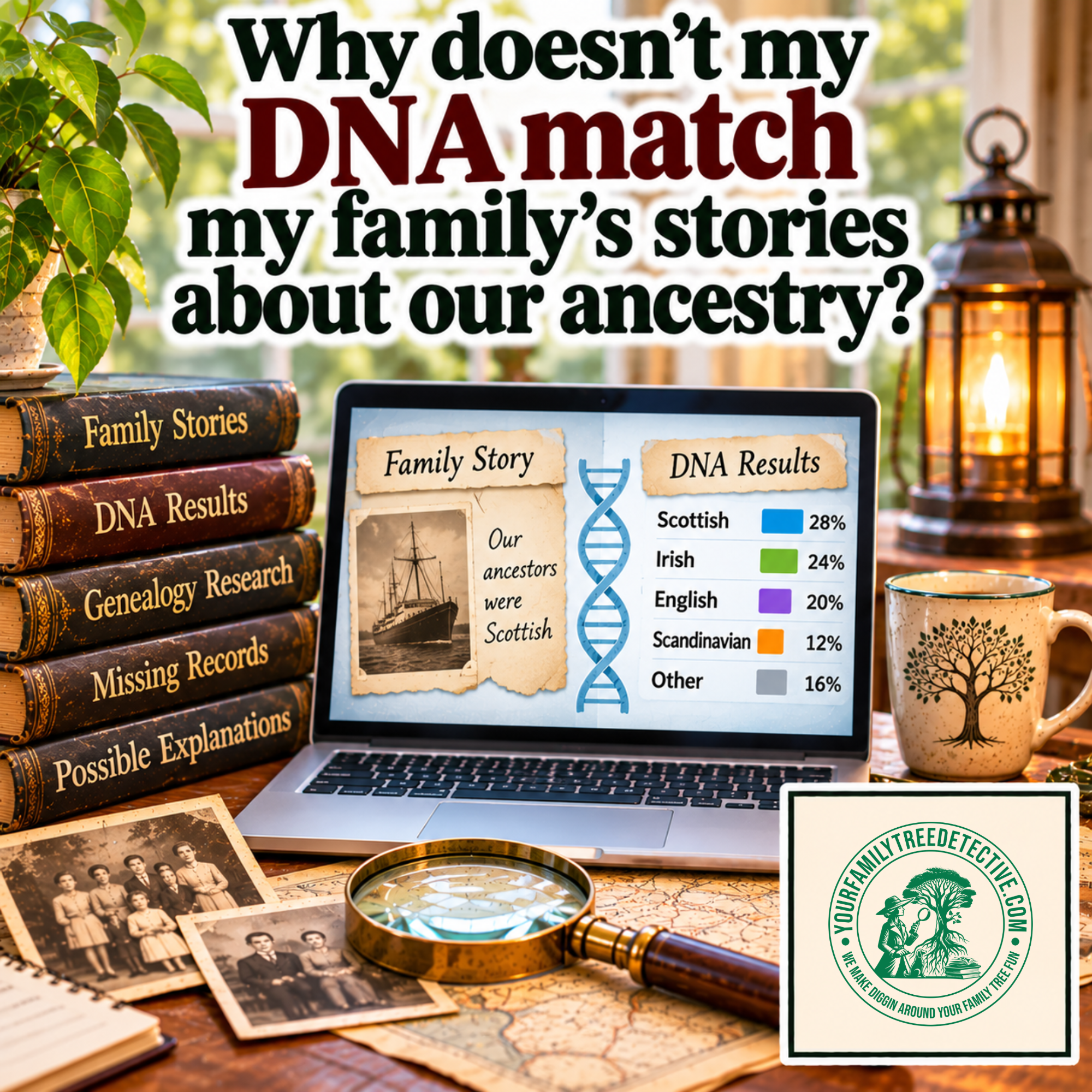
Have you ever grown up hearing that your family came from Scotland, Ireland, Germany, or somewhere else, only to take an ancestry DNA test and discover results that don't seem to match those stories? Perhaps your grandmother always insisted that her family was entirely Irish, but your DNA results show connections to England, Scotland, and Scandinavia instead. Suddenly, you're wondering whether the family stories were wrong, the DNA test made a mistake, or there's a mystery hiding somewhere in your family tree. So, why don't our DNA results always match the stories we've inherited, and what can these unexpected discoveries teach us about our ancestors?
One of the most important things to understand is that DNA ethnicity estimates are not the same as a documented family history. Testing companies compare your DNA with reference populations from different geographical regions, but those populations often share genetic similarities because people have migrated, married, and settled across borders for thousands of years. For example, someone whose ancestors lived in Ireland for generations might receive DNA estimates associated with Scotland or England because of the historical connections and genetic similarities between those populations. Your results are estimates rather than exact measurements of nationality, and they can change as testing companies expand their reference databases and refine their methods.
Another reason your DNA results might not match family stories is that we don't inherit equal amounts of DNA from every ancestor. Although you inherit approximately half your autosomal DNA from each parent, the genetic material passed down through earlier generations is randomly recombined, meaning some ancestors contribute more detectable DNA than others. You might have a documented great-great-grandparent from Germany, for example, but receive little or no identifiable German ancestry in your ethnicity estimate, particularly when neighbouring populations share similar genetic characteristics. This doesn't automatically mean your family history is incorrect, because having an ancestor from a particular country and inheriting DNA that a testing company identifies with that region are two different things.
Family stories can also change as they're passed from one generation to another, sometimes through misunderstandings, forgotten details, or the way our ancestors described their own identities. A family might have identified as Scottish because they lived in Scotland for generations, even though earlier ancestors migrated there from Ireland, England, or elsewhere, while other families may have preserved cultural traditions long after leaving their ancestral homeland. Occasionally, DNA testing reveals unexpected biological relationships involving adoption, donor conception, or previously unknown parentage, but an unusual ethnicity estimate alone is not evidence that such an event occurred. These discoveries can be surprising and sometimes emotionally complicated, so it's important to approach them with sensitivity, respect family members' privacy, and avoid making assumptions before examining the evidence.
So, what should you do when your ancestry DNA results seem to contradict everything you've been told about your family's origins? Begin by reviewing your documented family tree, identifying where your ancestors actually lived, and comparing historical records with the geographical regions suggested by your DNA results. Pay particular attention to your DNA matches, shared ancestors, and family connections, because these can often provide stronger genealogical evidence than ethnicity percentages alone. Most importantly, remember that DNA doesn't erase your family's stories, traditions, or cultural identity, but it can offer additional clues that help you explore those stories more deeply and discover fascinating chapters of your family history.
Today's Family Tree Challenge: Choose one family story about your ancestry that you've heard repeatedly and write down exactly what you've been told, including who shared the story with you. If you've taken a DNA test, compare that story with your ethnicity estimates and any relevant DNA matches, remembering that percentages alone cannot confirm or disprove the story. Search for one historical record, such as a birth certificate, marriage record, census return, or immigration document, that might help establish where the ancestors connected to that story actually lived. Record what you discover, identify any unanswered questions, and consider whether the evidence supports the original story or suggests another possibility worth investigating.
Let us know in the comments below about the stories you uncover.
Podcast Replay: https://youtube.com/live/gube1Kp96M0?feature=share
Ready to uncover your own family story?